Electrical capacity studies

Know your electrical capacity before you expand.

Adding a production line, major process equipment or a building expansion? ETEM Engineering assesses how the proposed loads affect your transformers, switchboards, MCCs, panels, feeders and main service—before equipment is ordered and construction begins.

When a capacity study helps

01

New production capacity

Evaluate a production line, process skid, conveyor system, refrigeration package or other major equipment before procurement.

02

Large motors and drives

Understand how motors, VFDs, compressors, chillers and related mechanical loads affect upstream equipment and operating demand.

03

Facility expansion

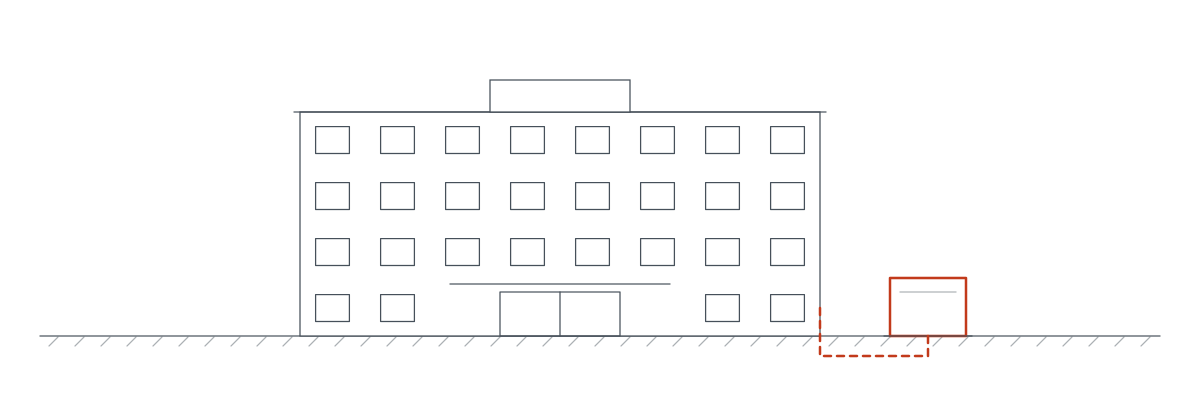
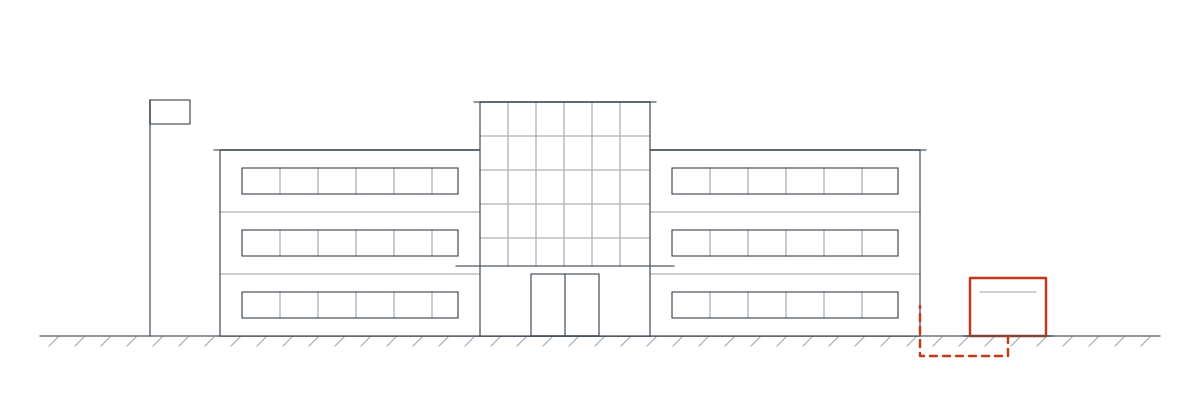
Model the effect of an addition, electrification project or phased expansion without assuming a full service upgrade is automatically required.

04

Capacity concerns

Investigate recurring trips, heavily loaded equipment, undocumented additions or conflicting information in legacy drawings and schedules.

05

Distribution upgrades

Identify whether the limiting point is the service, transformer, switchboard, MCC, panelboard or a specific feeder.

06

Capital planning

Turn an equipment list and existing drawings into a documented engineering basis for budgeting, utility discussions and detailed design.

How a capacity study works

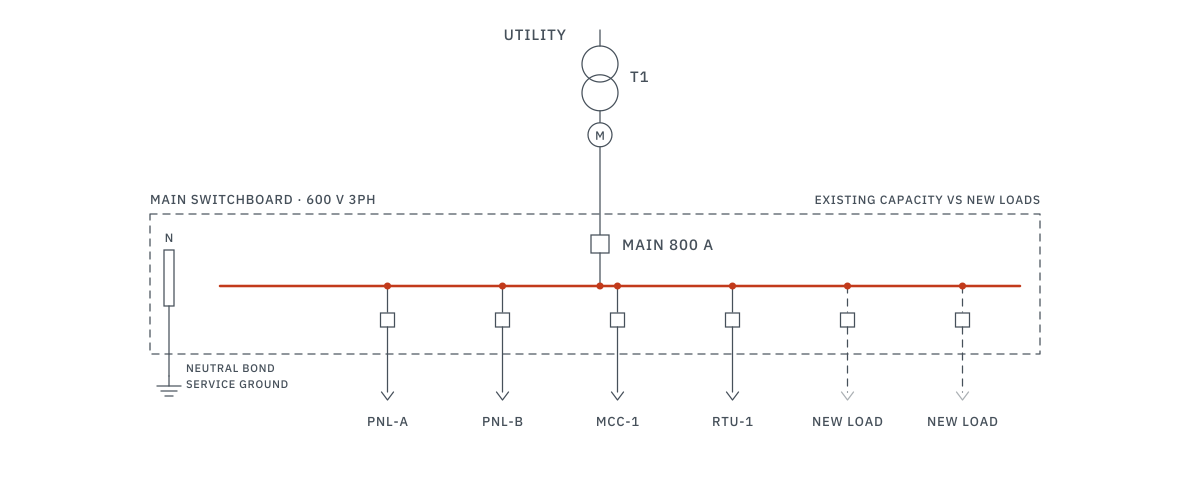
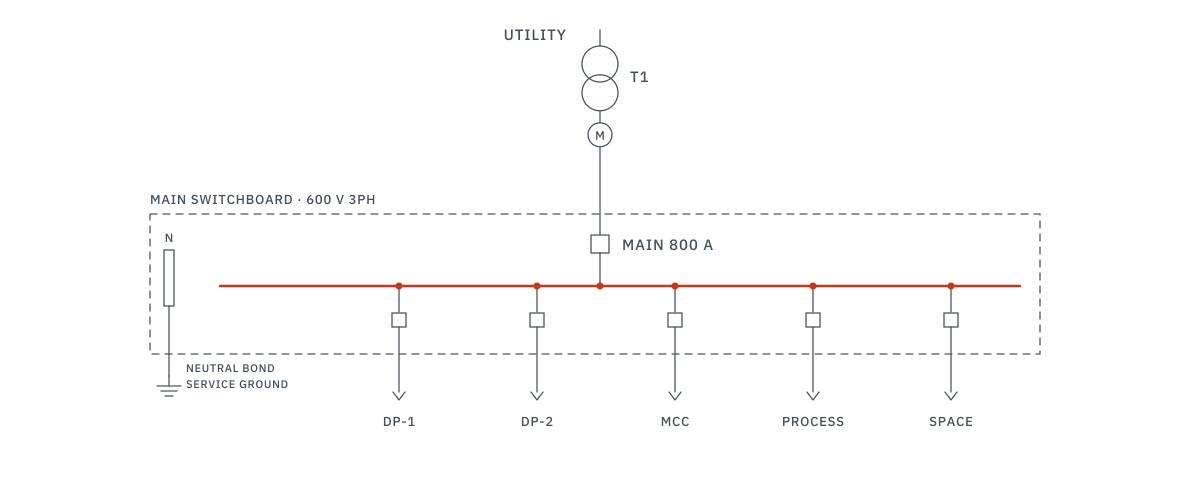
A transformer nameplate or main-breaker rating cannot answer the question by itself. The proposed loads are placed into the actual distribution hierarchy and traced through the equipment that will carry them.

Build the electrical model

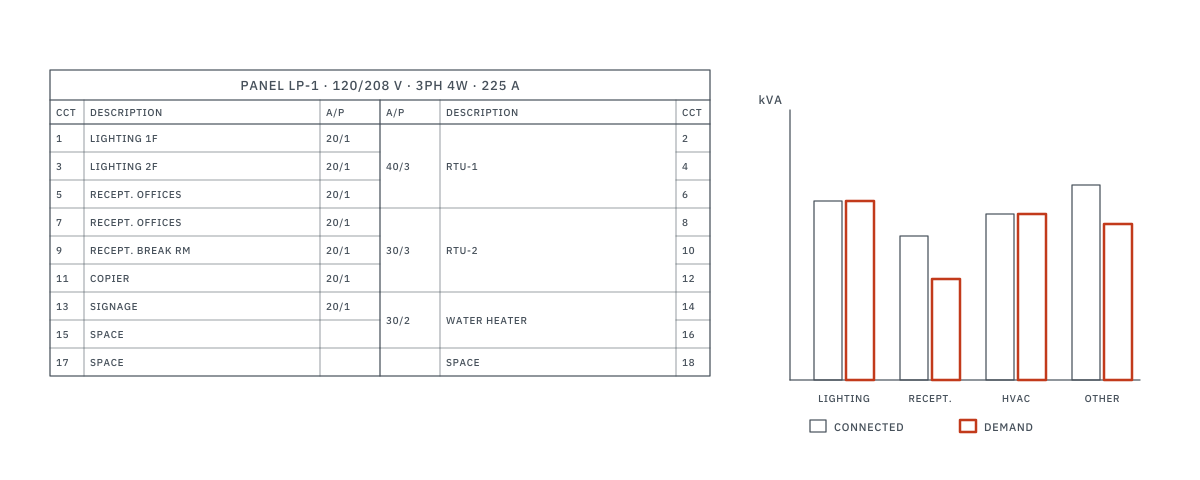
Existing and proposed loads organized by electrical ownership, not as one total, so it is clear where each new load lands.

  • Connected, demand and sizing load kept distinct
  • Existing and proposed loads clearly identified
  • Loads assigned to the actual panel, MCC or switchboard
  • Assumptions and missing information made visible for review
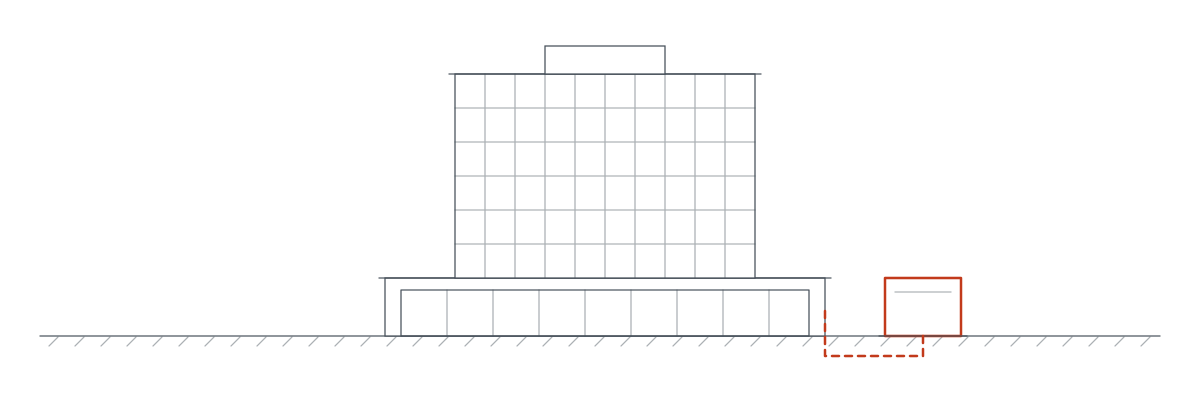
Trace the impact upstream

A load at an MCC or panel affects its feeder, the upstream transformer, the main switchboard and the service; the model keeps that hierarchy.

  • Distribution hierarchy and load roll-up
  • Panelboard, switchboard and MCC capacity screening
  • Transformer loading and proposed sizing basis
  • Direct connection between equipment and the upstream system

Assess the limiting equipment

The service may have room while a transformer, MCC, panel or feeder does not; local upgrades may avoid a more expensive service change.

  • Transformer demand, loading and sizing review
  • Main, bus and feeder capacity assessment
  • Conductor ampacity and voltage-drop screening where applicable
  • Motor and power-factor implications identified for planning

Document the decision

ETEM's Electrical Load Analysis Suite (ELAS) organizes the model and traces assumptions; the deliverable remains a project-specific engineering assessment led by ETEM Engineering.

  • Existing and proposed load schedules
  • Distribution topology and upstream/downstream trace
  • Transformer and equipment-capacity summaries
  • Engineering PDF and Excel outputs for review and next steps

Where a capacity study starts

It begins with the existing conditions and the proposed operating scenario. The answer may be smaller, or more focused, than expected: a practical decision path for the next stage of the project.

Codes, approvals and standards

  • OESCOntario Electrical Safety Code
  • CEC Rule 8-104Demand factors and motor loads
  • ESAPlan review (Rule 2-010) where triggered
  • UtilitiesToronto Hydro, Alectra and Hydro One
  • CSA Z462Arc flash: a separate study scope

Typical projects

All projects
  • Commercial · Electrical

    Commercial Service Entrance & Utility Coordination

    400–4,000 A service entrance design

    Utility metering configurations, transformer sizing, switchgear specification and coordination with Toronto Hydro, Alectra and Hydro One connection processes.

  • Institutional · Electrical

    Institutional Power Distribution & Panel Modernization

    Key systems: Capacity assessment, Panel upgrades, Arc flash

    Electrical capacity assessments, service entrance evaluations, distribution panel upgrades and arc flash hazard analysis, with P.Eng.-stamped coordination studies.

  • Civic · Electrical

    Civic Centre Complete Electrical Retrofit

    Up to 2,000 A service entrance upgrades

    Panelboard replacement, branch circuit redesign, HVAC electrical work, fire alarm integration and emergency generator sizing for aging municipal buildings.

Related guides

Knowledge Hub

Information to send

A perfect record set is not required for an initial discussion. The following information helps establish the study scope and the level of field verification required.

  • Existing single-line diagram and electrical drawings
  • Proposed equipment list and electrical data
  • Transformer, switchboard, MCC and panel nameplate information
  • Recent utility demand or interval data, if available
  • Proposed equipment locations and connection points
  • Expansion schedule, shutdown constraints and future allowances

Frequently asked questions

When should a factory complete an electrical capacity study?

Ideally before major equipment is ordered or construction commitments are made. Common triggers include a new production line, large motors or compressors, refrigeration or HVAC expansion, building additions, electrification projects and recurring capacity concerns.

Does a capacity study always lead to an electrical service upgrade?

No. The existing service may be adequate, or the constraint may be limited to a transformer, switchboard, MCC, panel or feeder. The purpose of the study is to identify the actual limiting point and avoid unnecessary upgrades.

Can ETEM review a 600 V industrial distribution system?

Yes. ETEM can assess common Ontario industrial distribution arrangements, including facilities with 600 V service and downstream utilization voltages. The study basis, available records and required field verification are established for each project.

What information is needed to begin?

Useful starting information includes the existing single-line diagram, electrical drawings, equipment and motor data, transformer and switchboard nameplates, recent utility demand information and the proposed equipment list. Missing information can be identified during the initial review.

Are short-circuit, coordination, arc-flash and harmonic studies included?

Not automatically. A capacity assessment can identify where those studies may be required, but they are separate scopes unless specifically included in the proposal.

Can the assessment support budgeting and utility discussions?

Yes. The capacity model and recommended next steps can provide an engineering basis for early budgeting, equipment planning and utility coordination. Detailed design and applications can follow under a separately defined scope.

Scope note: Final requirements depend on site conditions, available records, applicable codes, utility requirements, equipment ratings and the agreed engineering scope. A capacity assessment does not replace project-specific detailed design or separately required power-system studies.