Industrial Power Upgrades & Factory Expansion Electrical Capacity in Ontario
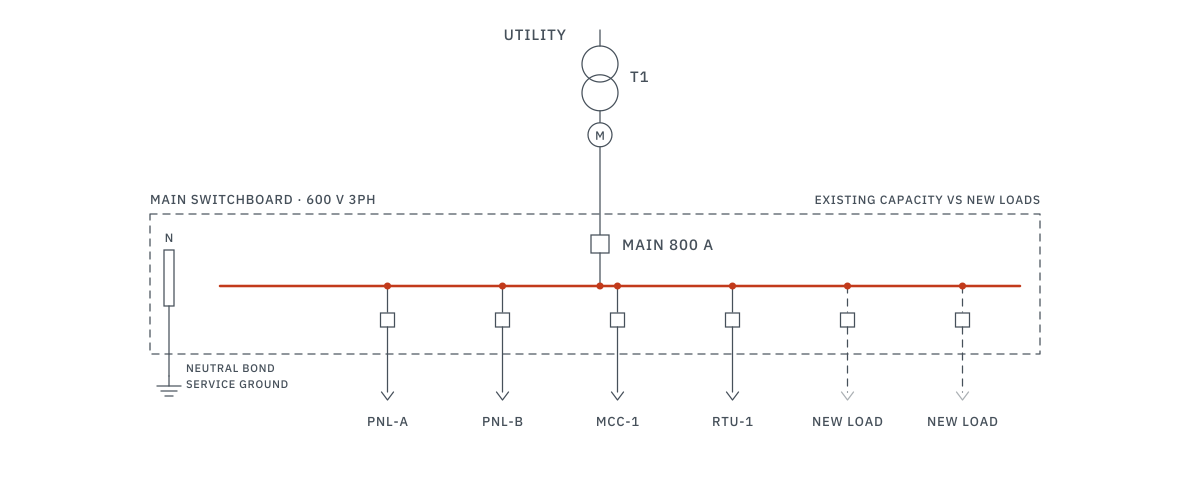
A production line can be selected, quoted and scheduled while the most important infrastructure question remains unanswered: can the existing transformer, switchboard, MCCs, feeders and service carry the new operating load?
Connected load, operating demand and design load must be separated and assigned to the equipment that actually carries them.
The limit may be a feeder, MCC, transformer or switchboard section—not necessarily the utility service.
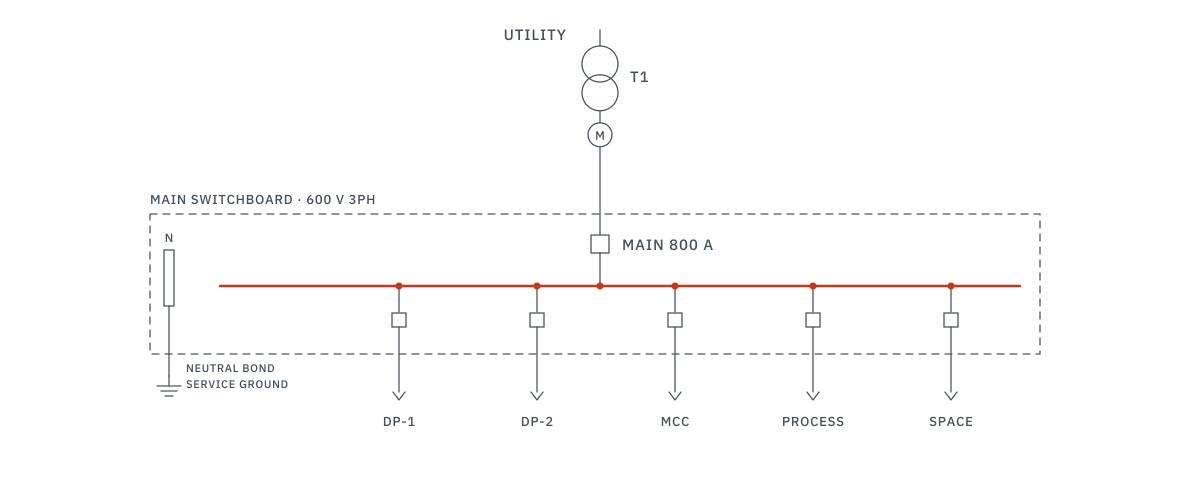
Distribution plans, single-lines and equipment schedules convert the study into a coordinated power-upgrade project.
When Expansion Becomes a Power-Infrastructure Project
Factory expansion projects usually begin with production: add a line, install a compressor, expand refrigeration, automate material handling, increase process cooling or electrify equipment. Electrical infrastructure is often considered after vendors, layout and schedule are already moving.
That sequence creates avoidable risk. The proposed machine may fit the floor plan while its intended MCC has no suitable section. A transformer may be near its practical limit. The switchboard may have apparent current capacity but no safe, constructible connection point. A feeder route may cross live production, or the required outage may not fit the planned commissioning date.
The useful question is not simply “How many amps does the new machine draw?” It is “Can the existing distribution support the proposed operating scenario, and what is the most practical upgrade path if it cannot?”
Voltage, phase, starting method, harmonics, controls, connection point and shutdown requirements can affect the equipment specification. Resolve the high-impact interfaces before the vendor release becomes expensive to change.
ETEM provides P.Eng.-led industrial electrical capacity studies and power-upgrade planning for manufacturing and process facilities—from existing-condition review through detailed distribution design.
Industrial Load Calculations: More Than Adding Nameplates
An industrial load calculation should reflect how the facility and proposed process will actually operate. The connected load is not automatically the demand load, and neither is automatically the final sizing basis. Motors, VFDs, welders, compressors, electric heat, refrigeration and cyclic process equipment each require project-specific treatment.
| Load layer | What it represents | Why it matters |
|---|---|---|
| Connected load | The sum of equipment nameplate or scheduled ratings connected to the system. | Provides the complete equipment inventory but may overstate coincident operation. |
| Observed demand | Measured demand during documented operating periods. | Provides useful evidence when production conditions, seasons and offline equipment are understood. |
| Proposed demand | The expected contribution of new equipment under the planned operating scenario. | Connects the equipment list to production schedules, diversity and simultaneous operation. |
| Sizing basis | The code- and design-based load used to assess feeders, transformers, equipment and service. | Supports defensible equipment selection and identifies where additional capacity is required. |
| Future allowance | A defined, realistic next-stage load rather than an unexplained percentage. | Prevents the current project from blocking a known future expansion. |
Our guide to load calculations and transformer sizing explains these distinctions in more detail. For an expansion, the calculation must also show where each proposed load lands in the distribution system and how it rolls upstream.
Typical expansion loads that change the study
Process skids, packaging, conveyors, robots, ovens, welders and new manufacturing cells.
Compressors, pumps, dust collection, fans and equipment with starting or power-quality implications.
Chillers, condensing units, pumps, controls and other coordinated mechanical loads.
Electric heat, ovens or equipment replacing gas, steam, pneumatic or hydraulic processes.
EV charging, forklifts, battery rooms and high-duty-cycle charging infrastructure.
Lighting, HVAC, fire protection, offices and services added with a new production area. Process exhaust and make-up air should be developed through a coordinated industrial ventilation design.
What the Existing Electrical System Must Prove
A transformer or main-breaker nameplate is evidence, not an available-capacity conclusion. The review should reconcile drawings, field conditions, measurements, operating history and proposed equipment data.
| Evidence | What it helps establish | What it cannot establish alone |
|---|---|---|
| Transformer nameplate | Rated kVA, voltage, impedance and basic equipment data. | Actual demand, downstream limitations or acceptable future loading. |
| Switchboard / main rating | Rated current and main-distribution configuration. | Usable spare sections, fault duty, feeder routing or capacity at the intended connection point. |
| Utility interval data | Recorded demand over the available measurement period. | Which loads were operating or how the proposed process will behave. |
| Single-line diagram | The intended distribution hierarchy and equipment relationships. | Whether years of plant modifications are accurately represented. |
| Vendor equipment data | Voltage, current, motor, protection and control requirements. | Demand contribution or suitability of the existing supply path without engineering review. |
What to send for an initial capacity review
Single-line diagram, panel and MCC schedules, transformer data and available electrical drawings.
Vendor data, motor list, voltage, phase, current, starting method and intended connection points.
Utility bills, interval data, meter records or operating logs with dates and known production conditions.
Clear photos and field information for switchboards, transformers, MCCs, panels and main devices.
Shift patterns, coincident loads, seasonal peaks, shutdown windows and processes that cannot be interrupted.
Target in-service date, procurement milestones, layout, phasing and reasonable future-capacity allowances.
Distribution Plans and Engineering Deliverables
A capacity study answers whether the system can support the expansion. Detailed industrial electrical design then defines how the work will be built, priced, reviewed and coordinated. The required deliverables depend on the project stage, but a power-upgrade package commonly includes:
- Existing and proposed single-line diagrams showing system topology and equipment ratings.
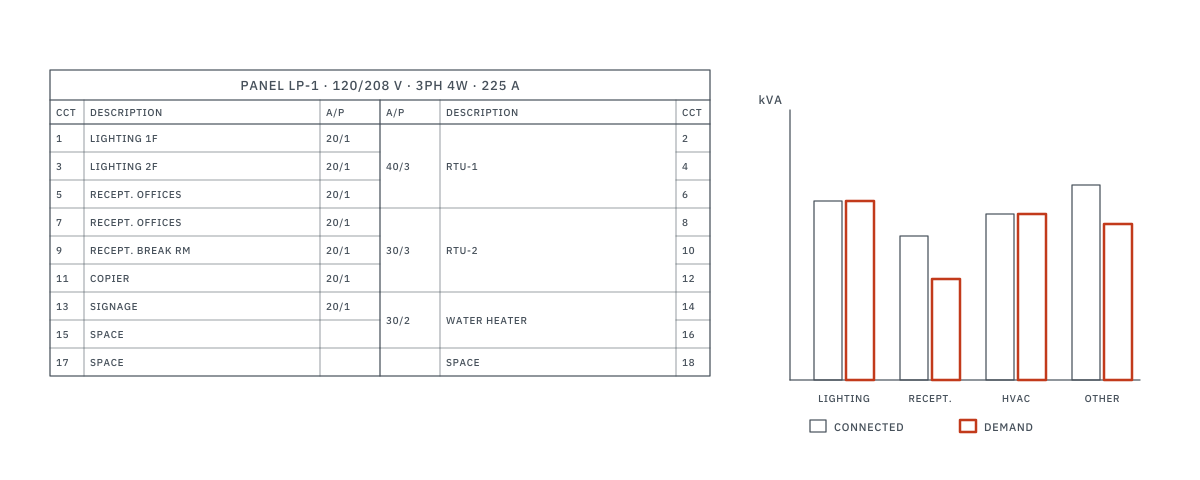
- Connected, demand and sizing load schedules with existing, proposed and future loads separated.
- Distribution plans identifying equipment locations, connection points and feeder routes.
- Transformer, switchboard, MCC and panel schedules appropriate to the design stage.
- Feeder, conductor, raceway, grounding and bonding design information.
- Equipment layouts, clearances, access and constructability coordination.
- Motor, VFD, control-power and equipment-interlock requirements.
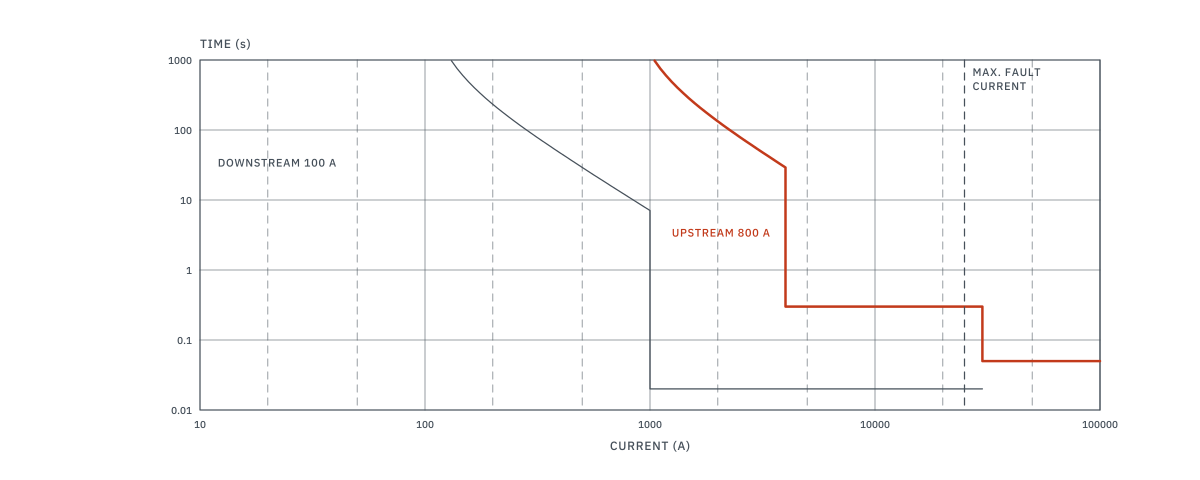
- Protection, short-circuit and coordination information where required by the scope.
- Utility, metering and service-upgrade requirements where the upstream supply changes.
- Construction notes, shutdown/phasing requirements and commissioning expectations.
A plan-review or permit submission and a tender/construction package do not always serve the same purpose. If the owner needs competitive pricing and fewer field assumptions, the documents should define interfaces, routing, acceptable substitutions and phasing—not only the minimum information needed for regulatory review.
A plant-wide total can hide a local bottleneck. ETEM uses its in-house Electrical Load Analysis Suite (ELAS) to organize load ownership, upstream/downstream relationships, assumptions and reviewable schedules; the engineering conclusion and drawings remain project-specific.
Practical Industrial Power-Upgrade Paths
A useful study does not begin with “buy a larger service.” It identifies the smallest defensible path that supports production, applicable requirements and future strategy.
Proceed using the documented loading assumptions, connection strategy and operating conditions.
Modify a feeder, panel, MCC or switchboard section while retaining the existing main service.
Increase transformation capacity and coordinate secondary distribution, protection and physical constraints.
Advance utility coordination and detailed service design when upstream supply is the limiting point.
Sequencing, interlocking or genuinely non-coincident operation may change the practical solution.
Define short-circuit, coordination, arc-flash, harmonic or utility work where the project requires it.
If the service itself is constrained, the project often expands into utility, metering, transformer, switchboard and outage coordination. See our guide to service entrance design and utility coordination. Where new equipment changes available fault current or protective-device performance, a short-circuit and coordination study may be part of the next stage.
ESA, Utility and Technical Coordination
An electrical capacity assessment establishes the planning basis; it is not automatically a complete construction design. The next stage may require sealed drawings, equipment specifications, utility submissions, ESA plan review, an electrical notification, tender documentation, shutdown planning and construction-phase engineering services.
The Electrical Safety Authority states that Ontario installations are governed by the current Ontario Electrical Safety Code (OESC), which combines the Canadian Electrical Code, Part I with Ontario amendments. ESA's current plan-review guidance also explains that plan review is a compliance review and is not a substitute for the work of a Professional Engineer. Applicability and submission requirements should be confirmed for the actual scope before electrical work begins.
Utility coordination should start early when the preferred solution changes the service, transformer, metering or available supply. Review timelines, equipment lead times and plant shutdown constraints can become schedule drivers even when the internal design is straightforward.
Related studies are selected from the actual system
- Short-circuit duty and protective-device coordination.
- Arc-flash incident-energy assessment and labelling strategy.
- Voltage drop, motor starting and sensitive-process voltage performance.
- Harmonic loading from VFDs, rectifiers, welders and nonlinear equipment.
- Power-factor implications and utility billing considerations.
- Grounding, bonding, controls power and equipment interlocks.
- Shutdown sequencing, temporary power and construction phasing.
These are not interchangeable checkboxes. They should be defined from the proposed equipment, system configuration and owner decision. Read our guides to harmonic analysis, power-factor correction and arc-flash hazard analysis when those conditions are relevant.
Choosing an Industrial Electrical Engineering Consultant
A factory power project needs more than a calculation sheet. The consultant should be able to connect plant operations, existing equipment, code requirements, utility interfaces and construction constraints into one documented decision path.
| Capability | What to look for | Why it matters |
|---|---|---|
| Industrial field assessment | A method for reconciling incomplete drawings, nameplates and live operating conditions. | Legacy plants rarely match one clean record set. |
| Load and distribution modelling | Traceable calculations that assign loads to the actual system hierarchy. | Reveals the first constraint instead of producing one plant-wide total. |
| Detailed distribution design | Single-lines, plans, schedules, feeder design and equipment specifications. | Turns the study into documents that can be priced and constructed. |
| Ontario regulatory knowledge | Current OESC, ESA, professional and utility coordination appropriate to the scope. | Prevents the technical concept from stalling at review or connection. |
| Construction and shutdown planning | Attention to phasing, temporary conditions, procurement and plant downtime. | Industrial success depends on implementation as much as calculation. |
ETEM Engineering supports Ontario industrial clients from early capacity assessment through load calculations, distribution plans, detailed power-upgrade design, tender support and construction coordination. The first conversation can begin with partial information; the purpose is to identify what is known, what must be verified and what decision the project needs next.
A Lower-Risk Factory Expansion Workflow
- Define the production scenario. Confirm equipment, process objective, duty cycle, shifts, simultaneous loads, future stages and target in-service date.
- Collect and verify the existing system. Review drawings, demand data and nameplates, then establish what must be field-verified.
- Build the load and distribution model. Separate connected, demand and sizing loads and assign each proposed load to its intended electrical owner.
- Trace the impact upstream. Review feeders, panels, MCCs, transformers, switchboards and service until the first limiting point is understood.
- Compare practical upgrade paths. Account for cost level, lead time, space, routing, shutdowns, utility work and future capacity.
- Develop the distribution design. Prepare the single-line, plans, schedules, equipment requirements and technical studies appropriate to the project stage.
- Coordinate procurement and construction. Review vendor data, ESA and utility requirements, protection, controls, phasing, shutdown and commissioning before field work begins.
A study can confirm the existing system is adequate, narrow the work to one local constraint or demonstrate that a larger capital project is justified. Each outcome is valuable when reached before procurement and construction commitments.
Technical and Regulatory References
- Electrical Safety Authority — Ontario Electrical Safety CodeOfficial overview of the current OESC, Ontario amendments and effective edition.
- Electrical Safety Authority — Electrical Plan ReviewCurrent ESA guidance on plan-review applicability and the distinction between ESA review and professional engineering work.
- Electrical Safety Authority — Code and Technical InformationOfficial ESA access point for technical information, bulletins and code-related guidance.
- Professional Engineers Ontario — Practice GuidelinesProfessional-practice resources relevant to engineering responsibilities, documentation and project-specific judgment.
Frequently Asked Questions
When should a factory complete an electrical capacity study?
Ideally before major equipment is ordered or a construction budget is committed. Common triggers include a new production line, large motors or compressors, process cooling, refrigeration, electrification, a building addition, recurring trips or uncertainty about the existing distribution system.
Does a factory expansion always require an electrical service upgrade?
No. The existing service may be adequate while the limiting point is a transformer, MCC, switchboard section, panelboard or feeder. A capacity study identifies the first actual constraint before an upgrade scope is selected.
What drawings are normally prepared for an industrial power upgrade?
The scope can include existing and proposed single-line diagrams, load schedules, equipment layouts, distribution plans, feeder and grounding details, equipment schedules, protection information, control interfaces and construction notes. Deliverables depend on the project stage and approvals required.
Can utility demand data be used in an industrial load calculation?
Recent utility or interval data can be useful evidence, but it must be interpreted against operating schedules, seasonal conditions, process cycles, equipment that was offline and the proposed future operating scenario.
What information is needed to start an industrial electrical capacity review?
Useful starting information includes the existing single-line diagram and electrical drawings, proposed equipment list and electrical data, recent utility demand information, major equipment nameplates, intended connection points, operating constraints, shutdown requirements and the expansion schedule.