CSA Z462 Arc Flash Compliance: The Ontario Employer's Complete Guide
An arc flash incident can generate temperatures four times hotter than the surface of the sun. In Ontario, if a worker is injured and you don't have a documented electrical safety program compliant with CSA Z462, you risk OHSA fines up to $2 million and, if criminally negligent, charges under the Westray Bill. This guide explains exactly what Ontario employers must do - and how to do it.
CSA Z462 vs. NFPA 70E: Which Applies in Canada?
This is the most common question we hear. The answer is clear:
| Standard | Country | Status in Ontario |
|---|---|---|
| CSA Z462 | Canada | Recognized standard - courts and MOL reference this for due diligence |
| NFPA 70E | United States | US standard - CSA Z462 is the Canadian benchmark |
CSA Z462 was developed based on NFPA 70E and is technically harmonized with it, but it aligns with Canadian codes including the Canadian Electrical Code (CEC) and provincial OHS legislation. If you're operating in Ontario, CSA Z462 is your benchmark.
The Legal Framework: OHSA and Due Diligence
Ontario's Occupational Health and Safety Act (OHSA) doesn't mention "arc flash" by name. But it creates a legal obligation that demands it:
OHSA Section 25(2)(h): Every employer shall "take every precaution reasonable in the circumstances for the protection of a worker."
In practice, the Ministry of Labour uses CSA Z462 for guidance on reasonable precautions: if an arc flash hazard exists in your facility, you must have assessed it and taken steps to mitigate it.
The consequences of non-compliance are severe:
- OHSA fines: Up to $2,000,000 per offence for corporations
- Criminal Code (C-45 / Westray Bill): Anyone directing the work can face criminal charges if criminal negligence causes death or bodily harm
- Civil liability: WSIA s. 28 bars most suits against covered employers; non-covered parties can still be sued
- Insurance implications: Insurers may deny claims if no documented safety program exists
The 7-Step Compliance Roadmap
CSA Z462 compliance isn't a one-time project - it's a program. Here's the structured approach:
Step 1: Establish an Electrical Safety Program (ESP)
This is your foundation. The ESP is a documented program that must include:
- Management commitment and safety policy statement
- Roles and responsibilities for electrical safety
- Safe work procedures for energized and de-energized work
- Lockout/tagout (LOTO) procedures per equipment type
- Training and qualification requirements
- Audits (ESP every 3 years; field work and lockout yearly)
Step 2: Conduct an Arc Flash Risk Assessment
This is the engineering core. A qualified Professional Engineer performs an arc flash hazard analysis per IEEE 1584 to determine incident energy at every piece of equipment. This requires:
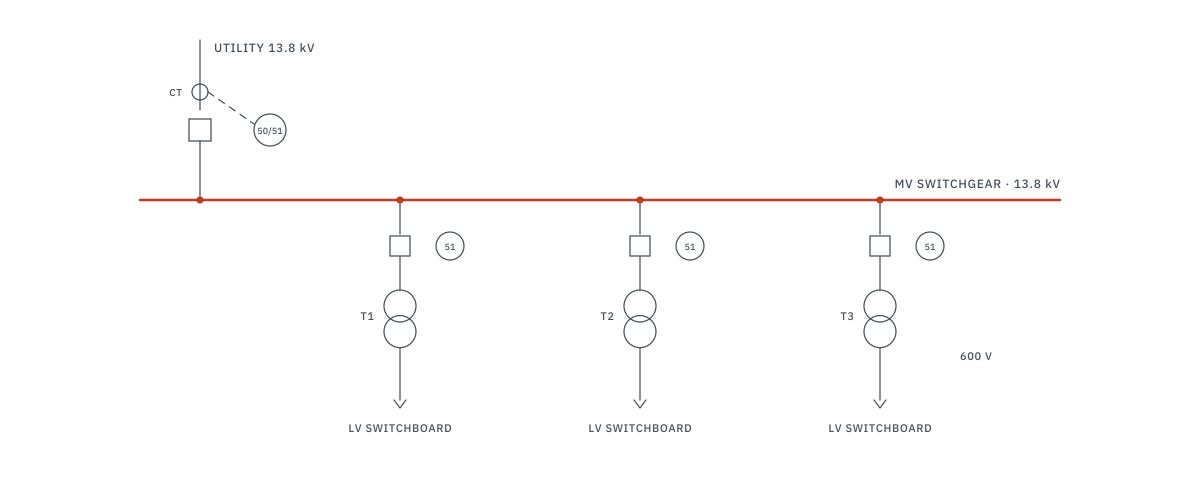
- Short circuit study - available fault current at every bus
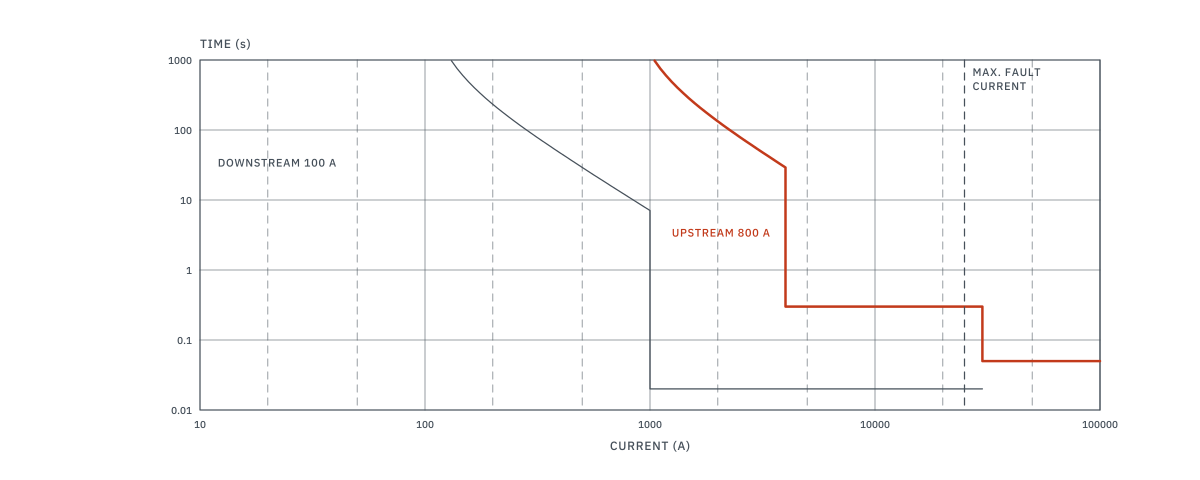
- Protective device coordination study - breaker trip times
- Incident energy calculation at each equipment location
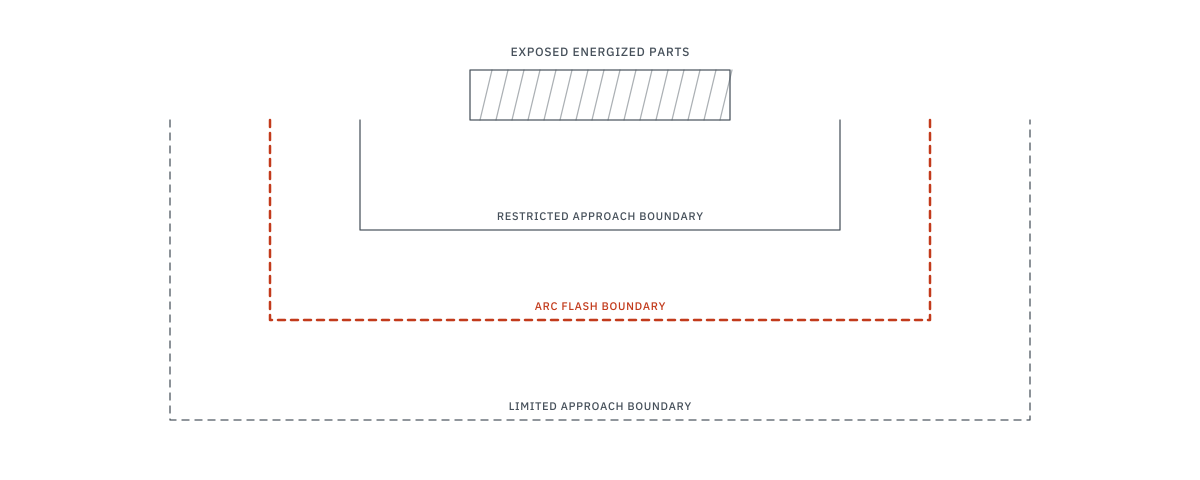
- Arc flash boundary calculation - the safe distance perimeter
Step 3: Label All Equipment
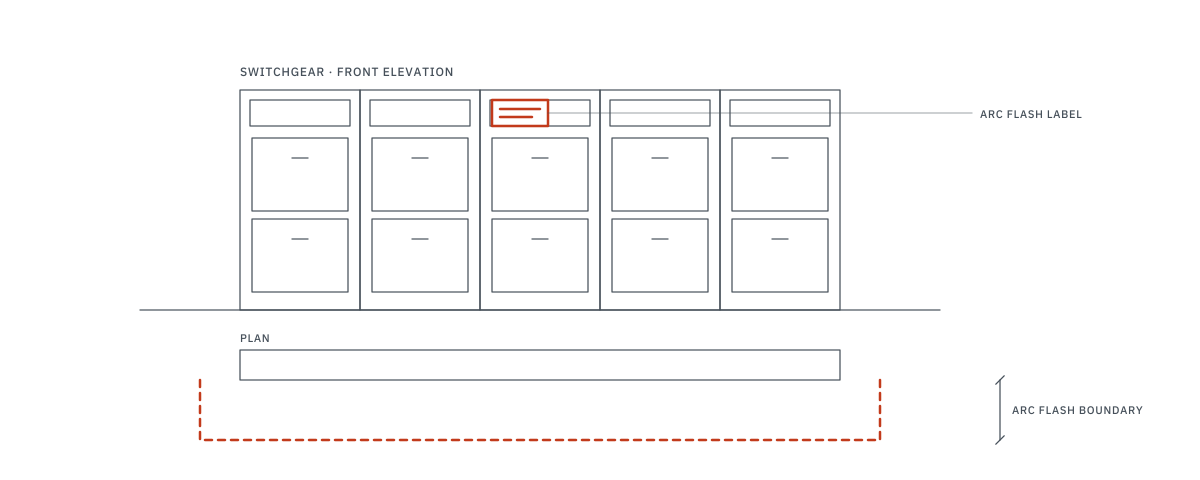
CSA Z462 requires arc flash warning labels on every piece of electrical equipment that may be serviced while energized. Each label must include:
| Label Element | Requirement |
|---|---|
| Incident energy (cal/cm²) or PPE category | At the working distance; not both |
| Arc flash boundary | Distance in feet/metres |
| Minimum arc rating or required PPE | Specific to this equipment |
| Nominal voltage | System voltage at this point |
| Date of the arc flash risk assessment | Required by CSA Z462 |
Step 4: Implement Engineering Controls
PPE is the last line of defense. The hierarchy of controls prioritizes engineering solutions:
- Arc-resistant switchgear: Directs arc energy away from workers through venting (doors closed and latched)
- Zone-selective interlocking (ZSI): Lets the upstream breaker trip with no intentional delay for faults in its zone
- Maintenance mode settings: Temporarily lower trip settings during maintenance - reduces clearing time and incident energy
- Current-limiting fuses: Clear faults in their current-limiting range in less than half a cycle - dramatically lower incident energy
- Remote racking and switching: Moves the worker away from the equipment during high-risk operations
Step 5: Select and Provide PPE
Select PPE rated at least to the incident energy from Step 2; the CSA Z462 table method instead uses these categories:
| PPE Category | Minimum Arc Rating | Required PPE |
|---|---|---|
| 1 | 4 cal/cm² | Arc-rated shirt + pants, arc-rated face shield, safety glasses, hard hat, hearing protection, leather gloves |
| 2 | 8 cal/cm² | Arc-rated coveralls, face shield + balaclava, leather gloves |
| 3 | 25 cal/cm² | Arc flash suit (hood, jacket, pants), rubber insulating gloves with leather protectors |
| 4 | 40 cal/cm² | Multi-layer arc flash suit, full hood, heavy-duty gloves |
| 5 (CSA only) | 75 cal/cm² | Arc flash suit system rated at least 75 cal/cm² |
Step 6: Train Your Workers
CSA Z462 defines two worker categories:
- Qualified persons: Trained and competent to work on or near energized equipment - understand shock and arc flash risks
- Unqualified persons: Must be trained to recognize hazards - may cross the limited approach boundary only if escorted
Training must be documented and refreshed at least every 3 years or when procedures change.
Step 7: Audit and Update
Your arc flash study and ESP are living documents. CSA Z462 requires review when:
- Equipment is added, modified, or replaced
- Utility fault current changes (transformer upgrade, new feeder)
- Protective device settings are modified
- At least every 5 years regardless of changes
Frequently Asked Questions
Does CSA Z462 apply in Ontario?
Yes. OHSA Section 25(2)(h) requires reasonable precautions for worker protection. MOL and courts reference CSA Z462 for due diligence. See our arc flash analysis guide.
What are the PPE categories?
Cat 1: 4 cal/cm². Cat 2: 8 cal/cm². Cat 3: 25 cal/cm². Cat 4: 40 cal/cm². Cat 5 (CSA only): 75 cal/cm². See our coordination study guide.
How often to update arc flash studies?
When equipment changes, utility fault current changes, device settings change, or at least every 5 years.