Transformer Overcurrent Protection: OESC Rule 26-254 Solved Step by Step
Every dry-type transformer in a commercial building needs three things sized correctly: the primary overcurrent device, the secondary panelboard rating, and the conductor sizes on both sides. Get any of these wrong and you'll either trip nuisance breakers on energization or fail ESA inspection. Here's the complete CEC calculation method with worked examples.
The Three Rules You Need to Know
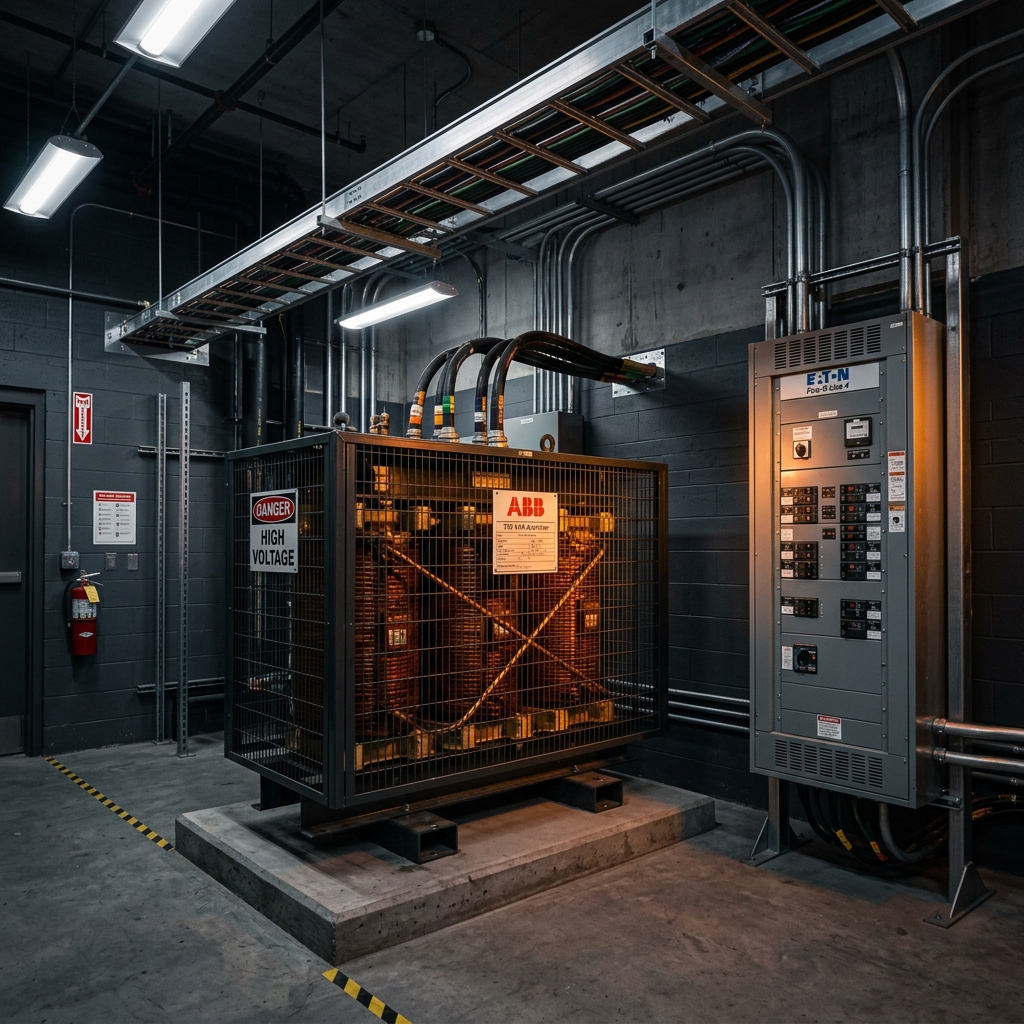
Transformer overcurrent protection in Canada is governed by three interconnected CEC rules. Understanding how they work together is the key to sizing everything correctly:
- Rule 26-254: Sizing the primary overcurrent protection device (OCP) for dry-type transformers rated 750 V or less
- Rule 14-606: Determining the minimum panelboard rating based on primary OCP
- Rule 26-256: Sizing primary and secondary conductors for the transformer
Rule 26-254: Primary Overcurrent Protection
For dry-type transformers rated 750V or less, the primary overcurrent device must be rated at not more than 125% of the rated primary current.
OESC Rule 26-254(1): Each ungrounded conductor of the transformer feeder shall be provided with overcurrent protection rated or set at not more than 125% of the rated primary current.
If the calculated value doesn't match a standard breaker size, the next higher standard rating is permitted (Rule 26-254(3)).
Solved Example 1: 15 kVA Transformer
Size the primary OCP and determine the minimum panelboard rating for a 15 kVA, 600V primary / 120/208V secondary dry-type transformer.
Step 1: Calculate Primary Full Load Current
Primary FLC:
Iprimary = 15,000 / (600 × √3) = 14.43A
Primary OCP:
14.43A × 1.25 = 18.0A - Standard size: 20A-3P
Step 2: Calculate Secondary Full Load Current
Secondary FLC:
Isecondary = 15,000 / (208 × √3) = 41.64A
Secondary conductor minimum ampacity:
41.64A × 1.25 = 52A
Step 3: Determine Minimum Panelboard Rating (Rule 14-606)
Minimum panelboard rating = Primary OCP × (Primary Voltage / Secondary Voltage)
= 20A × (600 / 208) = 57.7A
Next standard panelboard size: 60A panelboard
Complete Quick-Reference Table
The following table provides pre-calculated values for standard 600V to 120/208V dry-type transformers:
| Transformer kVA | Primary FLC | Primary OCP | Secondary FLC | Min. Panelboard | Primary Conductors | Secondary Conductors |
|---|---|---|---|---|---|---|
| 15 | 14.43A | 20A-3P | 41.64A | 60A | 3 #10 + #10 GND | 4 #6 + #10 GND |
| 30 | 28.9A | 40A-3P | 83.4A | 125A | 3 #8 + #6 GND | 4 #2 + #6 GND |
| 45 | 43.3A | 60A-3P | 124.9A | 225A | 3 #6 + #6 GND | 4 #1/0 + #6 GND |
| 75 | 72.1A | 100A-3P | 208.4A | 400A | 3 #3 + #4 GND | 4 #250mcm + #4 GND |
| 112.5 | 108.4A | 150A-3P | 312.6A | 600A | 3 #1/0 + #3 GND | 2"(4 #250 + #8 GND) |
| 150 | 144.5A | 200A-3P | 416.9A | 600A | 3 #3/0 + #1 GND | 2"(4 #300 + #1 GND) |
| 225 | 216.8A | 300A-3P | 625.1A | 1200A | 3 #300 + #1/0 GND | 2"(4 #500 + #1/0 GND) |
Solved Example 2: Reverse Calculation - Sizing OCP from Panelboard
What is the maximum rating of the primary overcurrent device for a transformer supplying a 200A, 120/208V, 3-phase, 4-wire panelboard from a 600V primary?
Primary OCP = Panelboard Rating / (Primary Voltage / Secondary Voltage)
= 200A / (600 / 208)
= 200 / 2.885 = 69.4A
The maximum rating is 60A - the next-lower standard rating (per Table 13), because when working backwards from the panelboard, you must round down.
Rule 26-256: Conductor Sizing for Transformers
The conductors on both sides of the transformer must meet specific minimum ampacity requirements:
| Side | Scenario | Minimum Ampacity |
|---|---|---|
| Primary | Single transformer | 125% of rated primary current |
| Primary | Multiple transformers on common feeder | 125% of largest + 100% of all others |
| Secondary | Single transformer | 125% of rated secondary current |
| Secondary | Transformers in parallel | 125% of sum of all secondary currents |
Transformer Energization: Why Breakers Trip on Power-Up
One of the most frustrating field problems is a transformer tripping its primary breaker the moment it's energized - even with no load connected. This happens because of magnetizing inrush current.
OESC Appendix B, Rule 26-254: To avoid nuisance tripping during energization, the overcurrent device should be able to carry:
12 × rated primary FLC for 0.1 seconds
25 × rated primary FLC for 0.01 seconds
This is why the code allows rounding up to the next standard breaker size - an undersized breaker will trip every time the transformer is re-energized after a power outage.
Common Mistakes
- Rounding the wrong direction - when sizing from kVA, round UP to next standard OCP. When sizing from panelboard rating (reverse), round DOWN
- Forgetting the voltage ratio for panelboard sizing - the panelboard minimum is NOT the secondary FLC, it's the primary OCP × (Vpri / Vsec)
- Sizing conductors for load instead of transformer rating - conductor ampacity must be based on 125% of the transformer's rated current, not the actual connected load
- Using 120V instead of 208V for three-phase calculations - the secondary voltage for a 3-phase, 4-wire system is 208V line-to-line, not 120V line-to-neutral
Frequently Asked Questions
How do you size transformer OCP per CEC?
For dry-type transformers rated 750 V or less, primary OCP is generally sized at not more than 125% of rated primary current under Rule 26-254, with the next higher standard size permitted when applicable. Transformer conductors are sized under Rule 26-256. See our load calculation guide.
Why do transformers trip on startup?
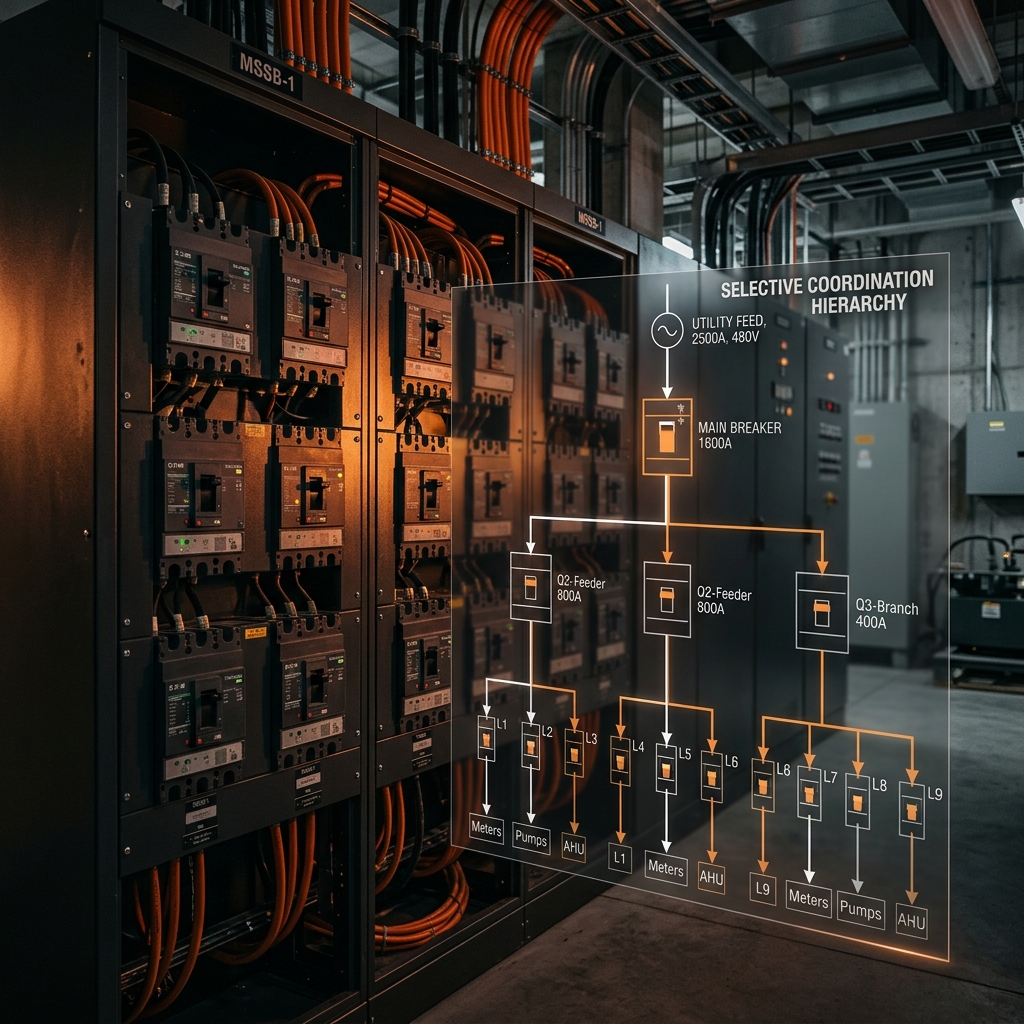
Inrush current reaches 8-12x FLA for the first few cycles. Use breakers with adjustable instantaneous settings. See our coordination guide.
What CEC rules govern transformer protection?
Rules 26-254 (dry-type transformer primary OCP), 14-606 (transformer-supplied panelboard rating), 26-256 (conductor sizing), and 26-258 (continuous load).
Download the Transformer OCP Quick-Reference Card
Get our printable reference card with pre-calculated OCP, panelboard, and conductor sizes for all standard dry-type transformers from 15 kVA to 225 kVA.
Need Transformer Protection Engineering?
ETEM Engineering designs transformer overcurrent protection schemes, performs coordination studies, and delivers CEC-compliant electrical designs for commercial and industrial facilities.
Get a Free Consultation