HVAC Electrical Coordination: VFDs, Motor Controls & Why the Mechanical Schedule Is Never Enough
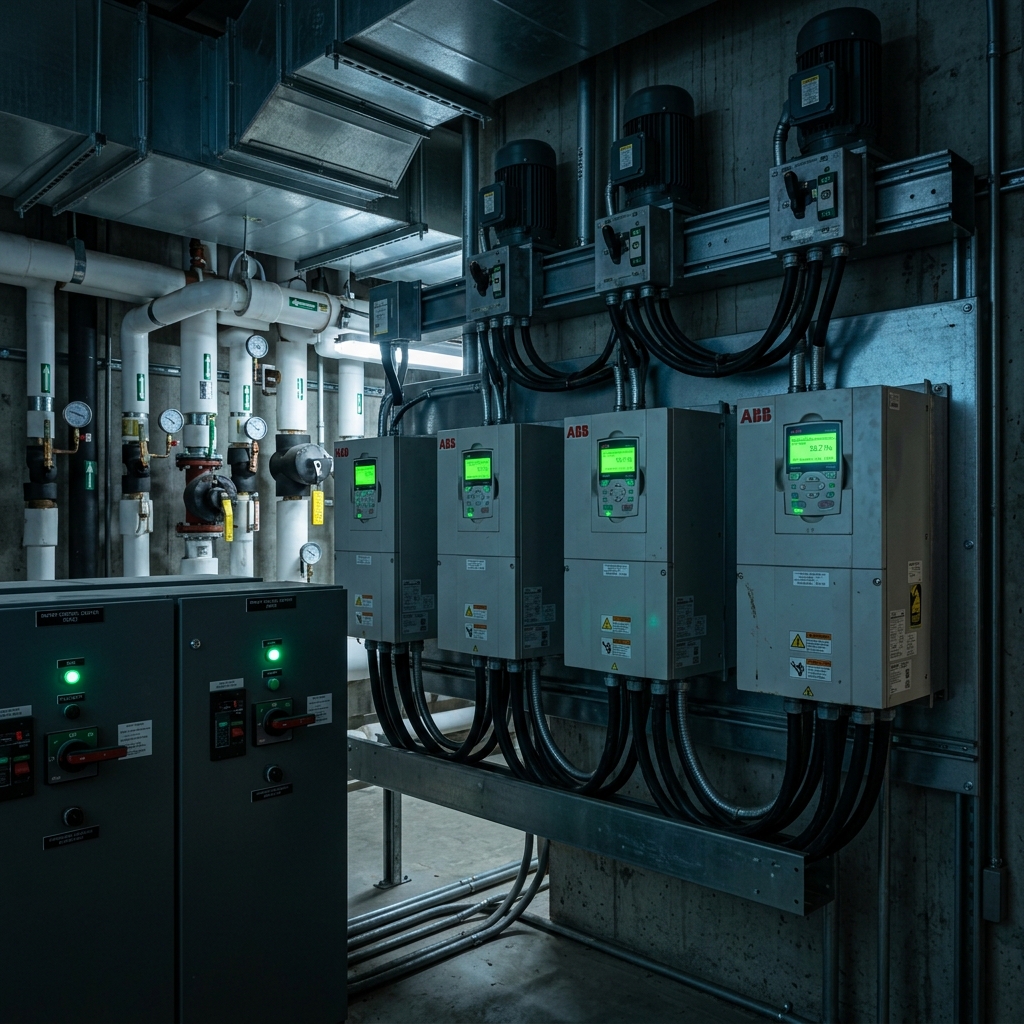
The mechanical engineer provides a schedule: "RTU-1: 10 HP, 575V, 3-phase." That's where most coordination ends - and where most problems begin. Motor electrical requirements go far beyond horsepower and voltage. Here's what the electrical engineer actually needs to design a reliable HVAC power system.
What the Mechanical Schedule Doesn't Tell You
A typical HVAC equipment schedule lists voltage, phase, and horsepower. But the electrical design needs much more:
| Mechanical Provides | Electrical Actually Needs | Why It Matters |
|---|---|---|
| 10 HP, 575V, 3Φ | MCA (Minimum Circuit Ampacity) | Determines conductor size |
| 10 HP, 575V, 3-phase | MOP (Maximum Overcurrent Protection) | Determines breaker size |
| 10 HP, 575V, 3-phase | FLA (Full Load Amps) | Required for VFD sizing |
| 10 HP, 575V, 3-phase | LRA (Locked Rotor Amps) | Affects voltage drop during startup |
| 10 HP, 575V, 3-phase | SCCR (Short Circuit Current Rating) | Must exceed available fault current |
| 10 HP, 575V, 3-phase | Disconnect requirements | CEC requires visible disconnect within sight of motor |
VFD Sizing - It's Not Just About Horsepower
Variable Frequency Drives (VFDs) are now standard on most HVAC fans and pumps for energy savings. But sizing a VFD involves more than matching the motor HP:
| Parameter | Rule | Example (10 HP @ 575V) |
|---|---|---|
| Motor FLA | From motor nameplate or CEC Table 44 | 10A |
| VFD output current | Must be motor FLA | 10A continuous |
| VFD input current | Typically 1.0-1.2" output (due to harmonics) | ~12A |
| Input conductor sizing | Based on VFD input current, not motor FLA | #12 AWG (for 12A @ 75°C) |
| Input protection | Per VFD manufacturer - typically 150-175% of input current | 20A breaker |
Common mistake: Sizing the VFD input breaker based on motor MOP. VFDs have their own overcurrent protection requirements specified by the manufacturer - these are almost always smaller than motor-direct MOP values. Using motor MOP on a VFD circuit violates the VFD listing.
Disconnect Requirements (CEC Rule 28-602)
The CEC requires a disconnecting means for every motor - but the details are where installations go wrong:
- Within sight of the motor - "within sight" means visible and within 9m (30 ft)
- For rooftop units: disconnect must be on the roof, adjacent to the unit - a breaker in the basement panel doesn't count
- Disconnect must be lockable in the open position for LOTO compliance
- For VFD-supplied motors: disconnect required both at VFD input and at motor
Typical HVAC Equipment Power Requirements
| Equipment Type | Typical Size Range | Voltage | Special Requirements |
|---|---|---|---|
| Rooftop Unit (RTU) | 3-25 HP supply fan, 30-150 kW heating | 575V or 347/600V | MCA/MOP on nameplate; economizer controls |
| Chiller | 50-500 HP compressor | 575V | Reduced voltage starting (VFD or soft starter); high LRA |
| Boiler | 50-500 kW (gas/electric) | 120V controls, 575V elements | Separate control transformer; gas interlock |
| Make-Up Air Unit (MAU) | 5-50 HP fan, 100-500 kW heating | 575V | High heating loads affect transformer sizing |
| Exhaust Fan | 0.5-15 HP | 575V or 347V | Often VFD-controlled for kitchen/lab exhaust |
| Circulation Pump | 1-25 HP | 575V | VFD standard for variable flow systems |
Coordination Meeting Checklist
To avoid costly field changes, electrical and mechanical engineers must coordinate on these items during design:
- Final equipment schedule with MCA, MOP, FLA, LRA for every motor
- VFD vs. across-the-line starting for each motor - affects conductor sizing and protection
- Control voltage requirements (24V, 120V) and who provides the control transformer
- Interlock wiring - fire alarm shutdown, BAS connections, smoke detector interlocks
- Emergency power - which HVAC equipment goes on generator (stairwell pressurization, smoke exhaust)
- Roof penetration locations for power feeds to RTUs and exhaust fans
Frequently Asked Questions
Why is HVAC coordination critical?
Mechanical schedules miss MCA, MOP, inrush data. Without coordination: undersized feeders and failed inspections. See our MCA/MOP guide.
How to size a VFD for HVAC?
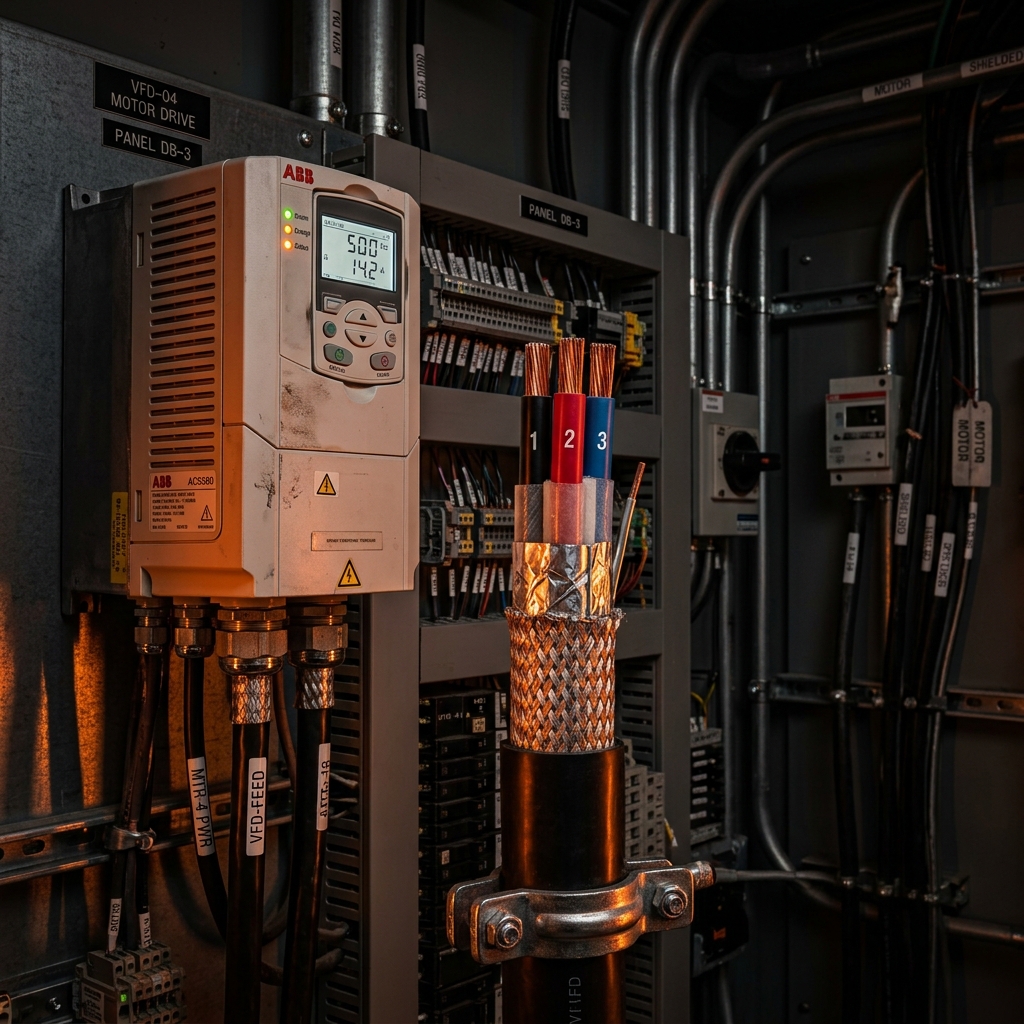
Based on motor FLA, not HP. Add 15-25% overload. Input current 10-15% higher. Use VFD-rated cable.
CEC disconnect rules for HVAC?
CEC 28-602: within sight, within 9m, lockable, rated for locked rotor current. VFD needs both input and motor disconnects.
Download the HVAC-Electrical Coordination Template
Get our Excel coordination template - pre-formatted for mechanical schedules, MCA/MOP calculations, and VFD sizing worksheets.


Need HVAC Electrical Design?
ETEM Engineering coordinates with mechanical teams to design complete HVAC power systems - motor controls, VFDs, disconnects, and panel schedules. We handle the complexity so your project stays on schedule.
Get a Free Consultation