Grounding vs. Bonding: The CEC Distinction Every Electrician Gets Wrong
"Just ground it." Three words that cause more confusion - and more code violations - than any other phrase in electrical work. Grounding and bonding are not the same thing. They serve completely different purposes, and confusing them can create dangerous installations that pass visual inspection but fail when it matters most.
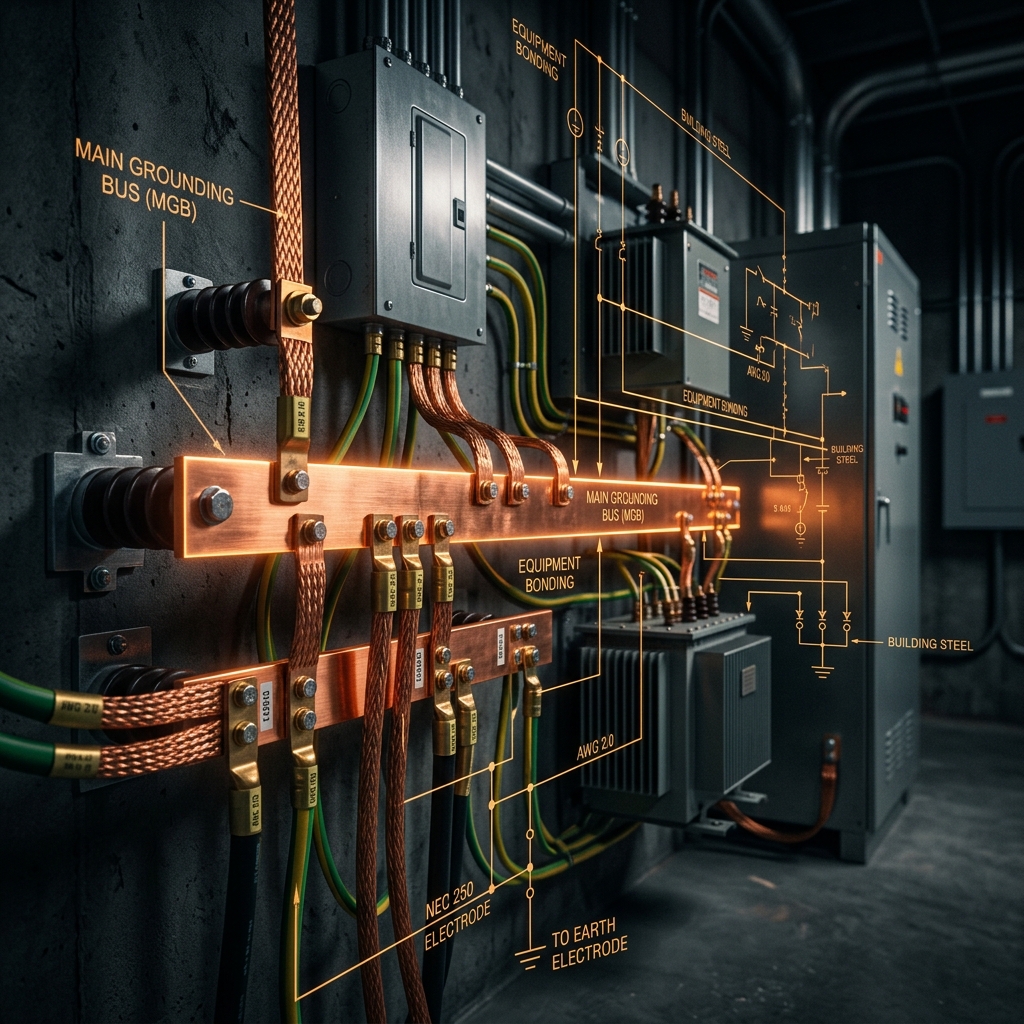
The Core Difference
The Canadian Electrical Code (CEC) defines these as two separate concepts in Section 10:
| Concept | CEC Definition | Purpose |
|---|---|---|
| Grounding | Connecting the electrical system to the earth | Stabilize voltage relative to earth and provide a path for lightning/surge dissipation |
| Bonding | Connecting all metallic parts together to form a continuous path | Ensure fault current flows back to the source so overcurrent devices can trip |
The simplest way to remember: Grounding connects to the earth. Bonding connects metal parts to each other. The earth is a terrible conductor - bonding is what actually saves lives by enabling breakers to trip during a fault.
Why This Matters: A Dangerous Scenario
Consider a metal equipment enclosure with a ground fault - a hot conductor touches the metal housing. Two outcomes are possible:
- Grounded but not bonded: The enclosure is connected to an earth rod, but there's no low-impedance path back to the source. Fault current trickles through the earth (high impedance), the breaker doesn't trip, and the enclosure stays energized at 120V. Anyone who touches it gets shocked
- Properly bonded: The enclosure has a low-impedance bonding conductor back to the panel's neutral bus. Fault current surges through the bonding path (hundreds of amps), the breaker trips in milliseconds, and the hazard is eliminated
The Three Types of Grounding/Bonding in the CEC
| Type | CEC Rule | What It Does | Example |
|---|---|---|---|
| System Grounding | Rules 10-102 / 10-114 | Connects the system grounding point to an approved grounding electrode system | Grounding conductor from system neutral to grounding electrode system |
| Equipment Bonding | Rule 10-616 / Table 16 | Provides a low-impedance fault return path from equipment back to the source | Bonding conductor or metallic raceway bonded back to the panel |
| Equipotential Bonding | Rule 10-700 | Connects specified non-electrical metal systems to the electrical bonding system | Metal water piping, gas piping, raised floors, and applicable conductive structures |
Grounding Electrode System (CEC Rule 10-102)
The CEC requires a grounding electrode system that connects the electrical system to earth. Acceptable electrodes include:
- Metal water pipe: At least 3m (10 ft) of buried metal pipe in contact with earth
- Ground rod: Minimum 3m (10 ft) copper-clad steel rod driven into the earth
- Concrete-encased electrode (Ufer ground): Rebar or conductor encased in the building's concrete foundation
- Ground plate: Minimum 0.186 m² copper plate buried at least 600mm deep
CEC Rule 10-102 defines acceptable grounding electrodes and installation requirements. For manufactured rod electrodes, the OESC generally requires two rods spaced at least 3m apart and interconnected with a properly sized grounding conductor.
Bonding Conductor Sizing (CEC Rule 10-616 / Table 16)
| Service/Feeder Conductor Size | Minimum Bonding Conductor (Copper) |
|---|---|
| #14 - #8 AWG | #14 AWG |
| #6 - #2 AWG | #10 AWG |
| #1 - #1/0 AWG | #8 AWG |
| #2/0 - #3/0 AWG | #6 AWG |
| #4/0 - 350 MCM | #4 AWG |
| 400 - 750 MCM | #2 AWG |
| Over 750 MCM | #1/0 AWG |
Common Field Mistakes
- Using earth as a fault return path - Earth has 25+ ohms of resistance. A 120V fault through 25 ohms produces only 4.8A - nowhere near enough to trip a 20A breaker. The enclosure stays live
- Bootleg ground - connecting the ground terminal to the neutral at a receptacle instead of running a proper bonding conductor. Extremely dangerous - puts neutral current on equipment enclosures
- Multiple neutral-ground bonds - the neutral and ground should be bonded at ONE point only (the service entrance). Additional bonds downstream create parallel paths for neutral current through equipment enclosures
- Undersized bonding conductors - using a #14 ground wire on a 200A feeder. CEC Table 16 specifies minimum bonding conductor sizes based on the service conductor size
Frequently Asked Questions
What is the difference between grounding and bonding?
Grounding connects the system to earth for voltage stabilization. Bonding connects metallic parts together to prevent shock. Both are required per CEC Section 10.
Why are both required?
Grounding alone doesn't protect from shock. Bonding ensures all surfaces are at the same potential. See our service entrance guide for grounding electrode details.
How is the bonding conductor sized?
Per CEC Table 16, based on the overcurrent device rating. A 200A service requires minimum #6 AWG copper bonding conductor.
Download the Grounding & Bonding Quick Reference
Get our one-page CEC grounding and bonding cheat sheet - electrode requirements, bonding conductor sizes, and the single most important rule to remember.

Need a Grounding System Assessment?
ETEM Engineering performs grounding system evaluations, ground resistance testing, and bonding audits for commercial and industrial facilities. We ensure your electrical system meets CEC requirements and protects your people.
Get a Free Consultation