Emergency & Exit Lighting: The OBC and CEC Requirements That Get Buildings Rejected
"The exit signs are installed." Great. But are they on a transfer switch? Do the battery units provide 30 minutes or 120 minutes? Is the illumination at floor level actually 10 lux? These are the questions building inspectors ask - and the ones that delay occupancy permits when the answers are wrong.
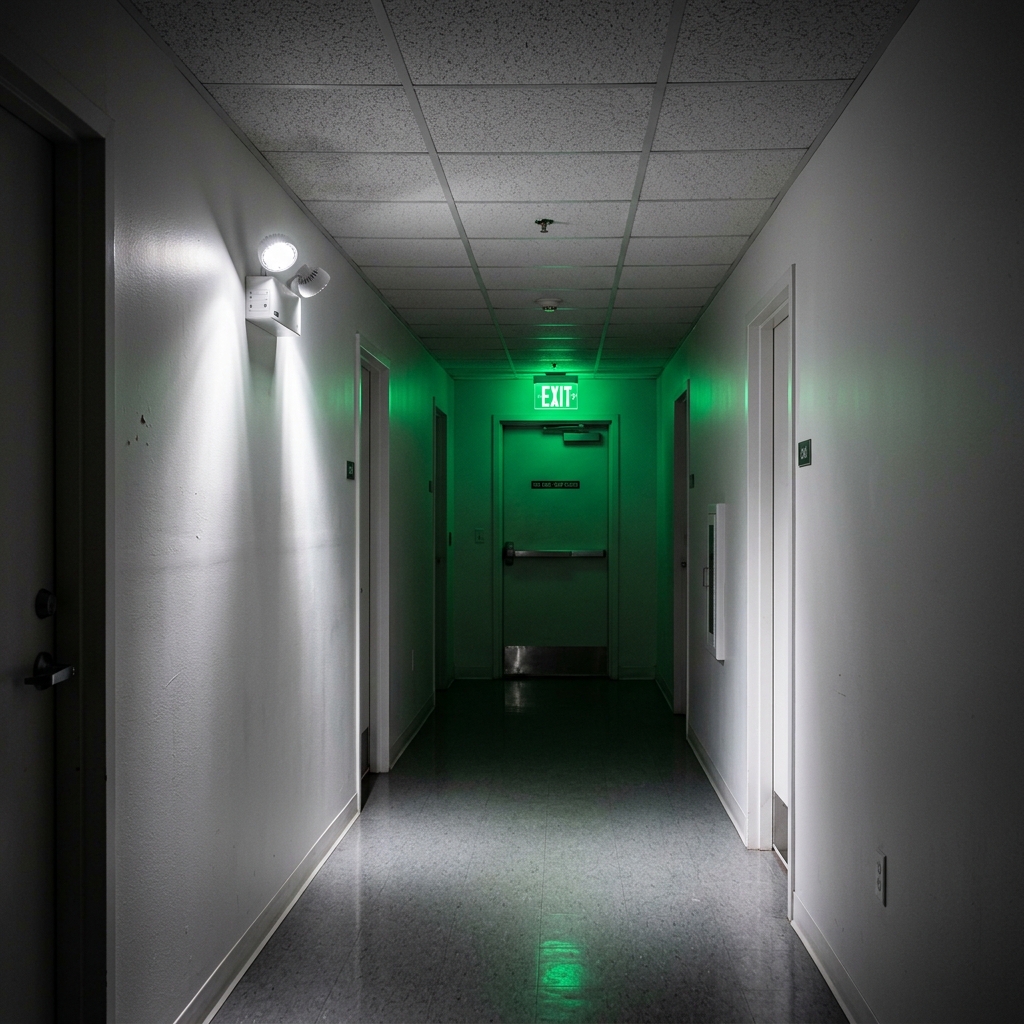
Two Codes, One System
Emergency lighting in Ontario is governed by two separate codes that must be satisfied simultaneously:
| Code | Governs | Key Sections |
|---|---|---|
| Ontario Building Code (OBC) | Where emergency lighting is required, illumination levels, exit sign placement | OBC 3.2.7.3 (Emergency Lighting), 3.2.7.4 (Emergency Power for Lighting), 3.4.5 (Exit Signs) |
| Canadian Electrical Code (CEC) | How the system is wired, power sources, transfer requirements | CEC Section 46 (Emergency Power), Rule 46-400 |
Where Is Emergency Lighting Required? (OBC 3.2.7.3)
- All exit corridors, stairwells, and passageways
- Principal routes providing access to exit from open floor areas
- All underground walkways and pedestrian tunnels
- Rooms with occupant loads exceeding 60 (assembly areas)
- Electrical equipment rooms and fire alarm control rooms
- All elevator cars
Illumination Requirements
| Location | Minimum Illumination | Measurement Point |
|---|---|---|
| Exit corridors & stairways | 10 lux | At floor level |
| Open floor areas (principal routes) | 10 lux | At floor level along the route |
| Elevator cars | 10 lux | At floor level |
The 10 lux minimum must be maintained at the end of the battery duration period - not at full charge. Battery units dim as they discharge. Designers must account for lumen depreciation and ensure 10 lux at the 30-minute (or 120-minute) mark.
Battery Duration: 30 Minutes, 1 Hour, and 2 Hours
| Building Type | Required Duration | Reason |
|---|---|---|
| Other buildings not listed for longer duration | 30 minutes | Minimum duration under OBC 3.2.7.4 for many standard applications |
| Certain Group B and other listed buildings | 1 hour | Confirm occupancy and building classification under OBC 3.2.7.4 |
| High buildings in the scope of OBC 3.2.6 | 2 hours | Extended evacuation and life-safety operation time |
| Generator-backed emergency lighting | Per OBC/NBC and CSA C282 | Duration, transfer, fuel supply, and testing depend on building classification and generator standard requirements |
Exit Sign Requirements (OBC 3.4.5)
- Green pictogram exit signs (running man symbol) are now required - red "EXIT" text signs are being phased out
- Must be visible from any point in the corridor - maximum 30m viewing distance
- Required at every change of direction in the exit path
- Must be illuminated internally (not externally lit) for new construction
- Must have integral battery backup or be on emergency power circuit
CEC Section 46 - Emergency Power Supply
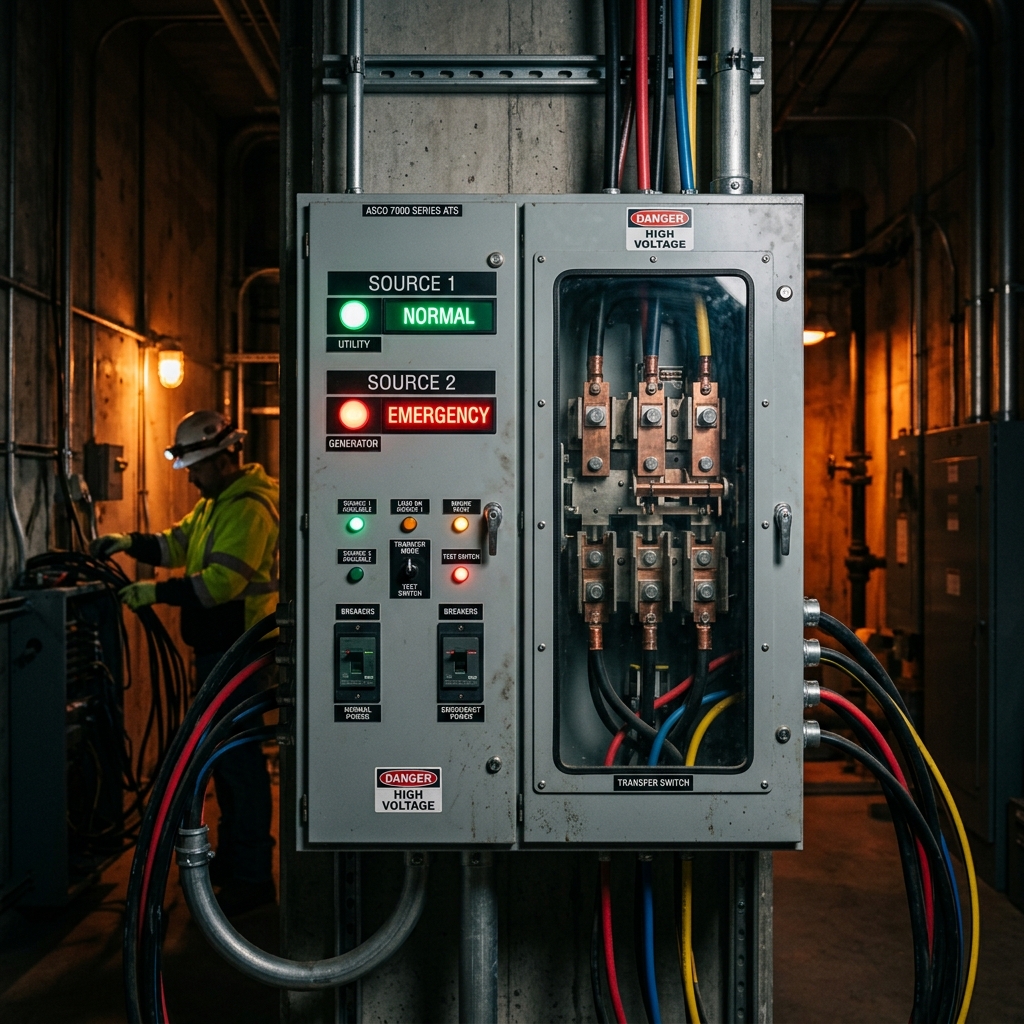
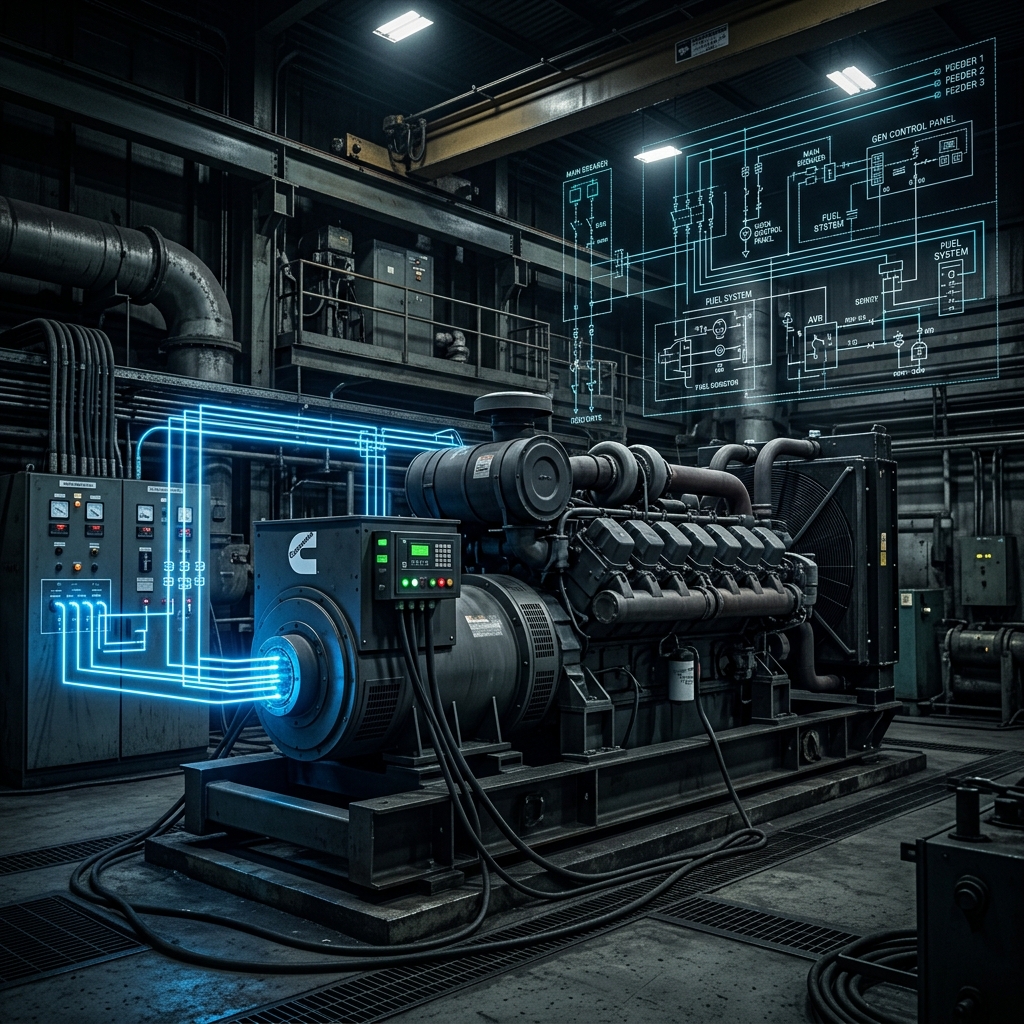
When a generator serves as the emergency power source, CEC Section 46 governs the transfer requirements:
| CEC Rule | Requirement |
|---|---|
| 46-108 | Emergency system wiring shall be kept entirely independent of all other wiring - except where conductors enter transfer switches, exit signs, and unit equipment (Subrule 4 permits shared boxes without barriers) |
| 46-202 | Emergency power supply types: generator conforming to CSA C282 or central battery system. Transfer switch required for life safety systems |
| 46-302 | Unit equipment shall be mounted at least 2 m above floor level to prevent tampering and provide adequate illumination coverage |
| 46-304 | Unit equipment supply connections - typically connected to a receptacle on a normal lighting circuit in the area served, using flexible cord and attachment plug |
| 46-400 | Exit signs - must be on a dedicated connection to a power supply; location requirements set by the Ontario Building Code |
Monthly & Annual Testing Requirements
| Test | Frequency | Duration |
|---|---|---|
| Functional test (verify lights turn on) | Monthly | 30 seconds |
| Full duration test | Annually | 30 or 120 minutes (per building classification) |
| Generator transfer test | Monthly | 30 minutes under load |
Frequently Asked Questions
How long must emergency lights stay on?
OBC 3.2.7.4 sets the duration by building type and occupancy: commonly 30 minutes, 1 hour, or 2 hours. CEC Section 46 governs the electrical emergency power supply and wiring. See our fire detector guide.
Where is emergency lighting required?
Exit stairways, corridors, elevator lobbies, electrical rooms, and occupant loads >60 per OBC 3.2.7.3.
What are the testing requirements?
Monthly 30-sec functional test, annual full-duration discharge. Document all per CAN/CSA C22.1.
Download the Emergency Lighting Compliance Checklist
Get our inspection-ready checklist covering exit sign placement, illumination levels, battery testing, and CEC Section 46 wiring requirements.
Need an Emergency Lighting Design?
ETEM Engineering designs OBC-compliant emergency and exit lighting systems - from unit equipment layouts to full generator-backed transfer schemes. We handle the photometric calculations, device scheduling, and permit drawings.
Get a Free Consultation