DALI vs. 0-10V: Choosing the Right Lighting Control Protocol
The architect wants tunable white lighting in the boardroom. The energy code demands automatic shutoff and daylight harvesting. The owner wants it all for the price of toggle switches. Welcome to the lighting controls specification - where the protocol you choose defines the project's flexibility, cost, and code compliance for the next 20 years.
Why Lighting Controls Matter More Than Ever
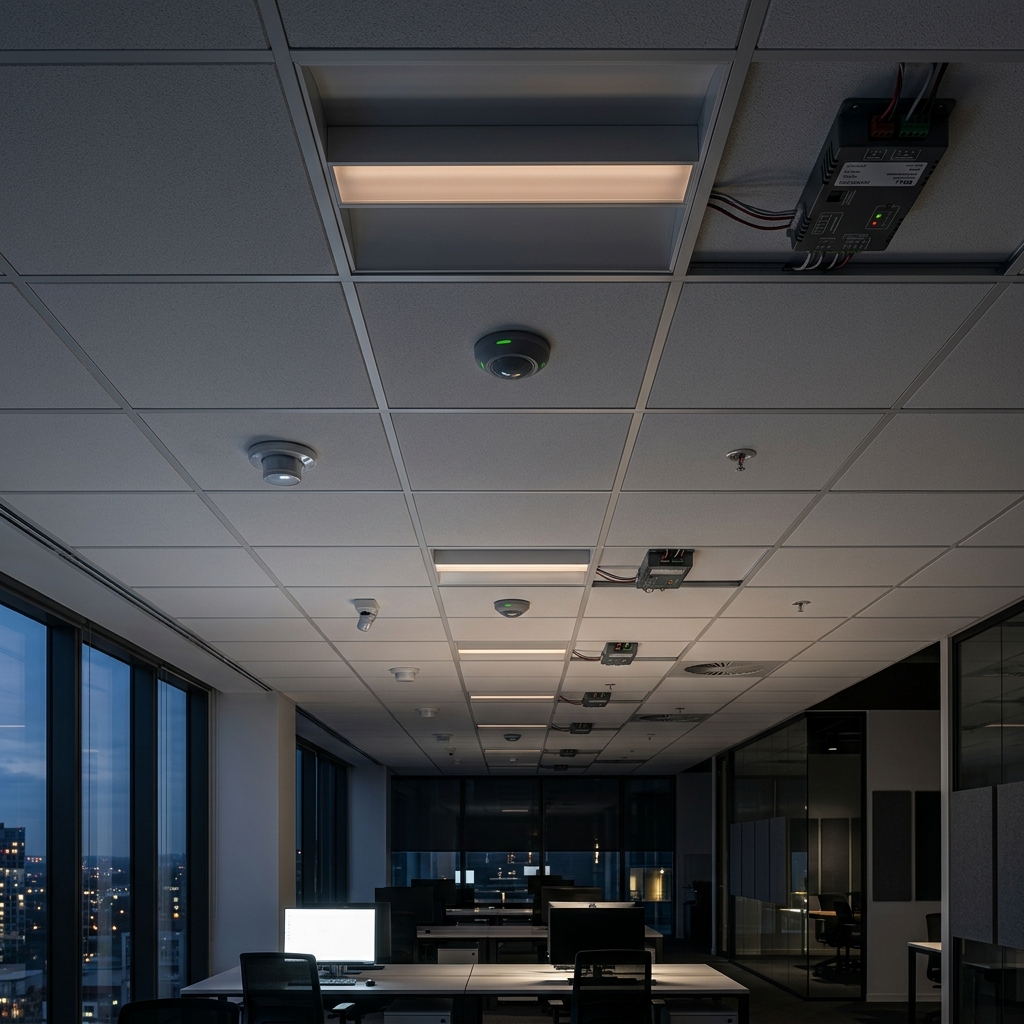
Modern energy codes - ASHRAE 90.1, NECB 2020, and Ontario's SB-10 - have moved far beyond simple on/off switching. Today's mandatory lighting control requirements include:
- Automatic shutoff: Occupancy/vacancy sensors in all regularly occupied spaces
- Daylight responsive controls: Automatic dimming in daylit zones within 4.5m of windows
- Demand response capability: Ability to reduce lighting power by 15% on utility signal
- Scheduling: Time-based automatic on/off for all spaces
- Task tuning: Ability to permanently reduce light levels below design maximum
Meeting these requirements demands a robust dimming protocol. The two dominant contenders in commercial construction are DALI (Digital Addressable Lighting Interface) and 0-10V analog dimming.
The Head-to-Head Comparison
| Parameter | DALI | 0-10V |
|---|---|---|
| Signal Type | Digital (bidirectional) | Analog (unidirectional) |
| Wiring | 2-wire bus (polarity-free) | 2-wire (polarity-sensitive) |
| Devices per Circuit | 64 per DALI bus | Unlimited (current-limited) |
| Individual Addressing | Yes - each fixture has a unique address | No - all fixtures on a wire dim together |
| Feedback/Status | Yes - lamp failure, burn hours, energy data | No - one-way signal only |
| Grouping | Software-based (reconfigure anytime) | Hardwired (requires rewiring to change) |
| Dimming Curve | Logarithmic (IEC 62386) - smooth | Linear - can appear uneven at low end |
| Commissioning | Software commissioning required | Plug-and-play, no programming |
| Typical Cost Premium | 15-25% over 0-10V | Baseline |
| Best For | Open offices, flexible spaces, high-end | Warehouses, corridors, simple layouts |
When to Specify DALI
DALI's strengths emerge in spaces that demand flexibility and granular control:
DALI's killer feature is software-based rezoning. When the tenant reconfigures cubicles into private offices, the lighting zones can be remapped in software - no electrician, no rewiring, no permit. For a 0-10V system, the same change requires opening ceilings and pulling new control wires.
DALI-2 and D4i: The Latest Evolution
DALI-2 (IEC 62386 Ed. 2) introduces standardized device interoperability - any DALI-2 driver works with any DALI-2 controller, eliminating vendor lock-in. D4i extends DALI-2 with integrated sensors and power metering inside the luminaire, enabling fixture-level IoT without additional wiring.
When to Specify 0-10V
0-10V remains the right choice when simplicity and cost are paramount:
- Warehouses and industrial: Large open spaces with uniform lighting - no need for individual fixture control
- Corridors and stairwells: Simple on/off with occupancy dimming - 0-10V with a sensor is sufficient
- Budget-constrained projects: When the owner's priority is code compliance at minimum cost
- Retrofit projects: When existing conduit can't accommodate additional DALI bus wiring
Energy Savings by Control Strategy
| Control Strategy | Typical Savings | Best Application |
|---|---|---|
| Occupancy sensing (vacancy) | 20-30% | Private offices, washrooms, meeting rooms |
| Daylight harvesting | 25-40% | Perimeter zones within 4.5m of windows |
| Task tuning | 10-20% | Over-lit spaces (common in new LED installs) |
| Scheduling / sweep-off | 10-15% | After-hours energy waste elimination |
| Personal dimming control | 5-10% | Open offices with individual workstation control |
| Combined strategies | 40-60% | Full DALI/IoT implementation |
Common Specification Mistakes
- Mixing DALI-1 and DALI-2 devices - they communicate, but DALI-1 devices lack standardized commands, causing interoperability issues
- Exceeding the 64-device DALI bus limit - each DALI bus supports exactly 64 addresses. Larger zones need DALI gateways or multiple buses
- Not budgeting for commissioning - DALI systems require software commissioning (addressing, grouping, scene programming). This takes 2-5 days for a typical office floor
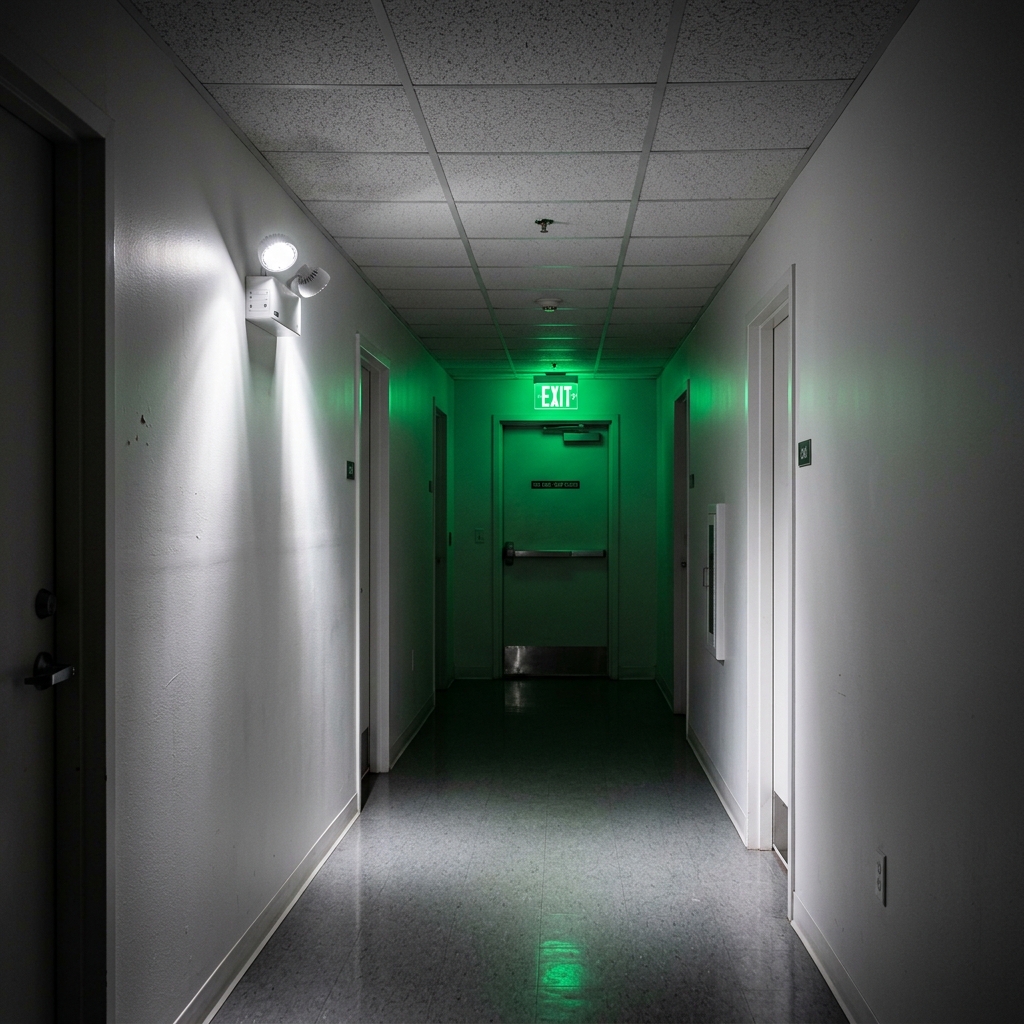
- Forgetting emergency lighting integration - DALI can control emergency luminaires, but this requires dedicated DALI emergency drivers and careful bus architecture
- Specifying 0-10V for tunable white - tunable white (CCT adjustment) requires two control channels. DALI handles this natively; 0-10V needs double the control wiring
Frequently Asked Questions
DALI vs 0-10V: what's the difference?
DALI is digital, bidirectional, supports individual fixture control. 0-10V is analog, unidirectional, simple dimming only.
When should I specify DALI?
For individual fixture control, daylight harvesting, complex zoning, or ASHRAE 90.1/NECB compliance.
How much energy do controls save?
Occupancy: 20-40%. Daylight harvesting: 25-50%. Combined: 50-70% total reduction.
Download the Lighting Controls Specification Guide
Get our protocol selection matrix and specification templates - pre-formatted for DALI-2, 0-10V, and wireless control systems.
Need a Lighting Controls Design?
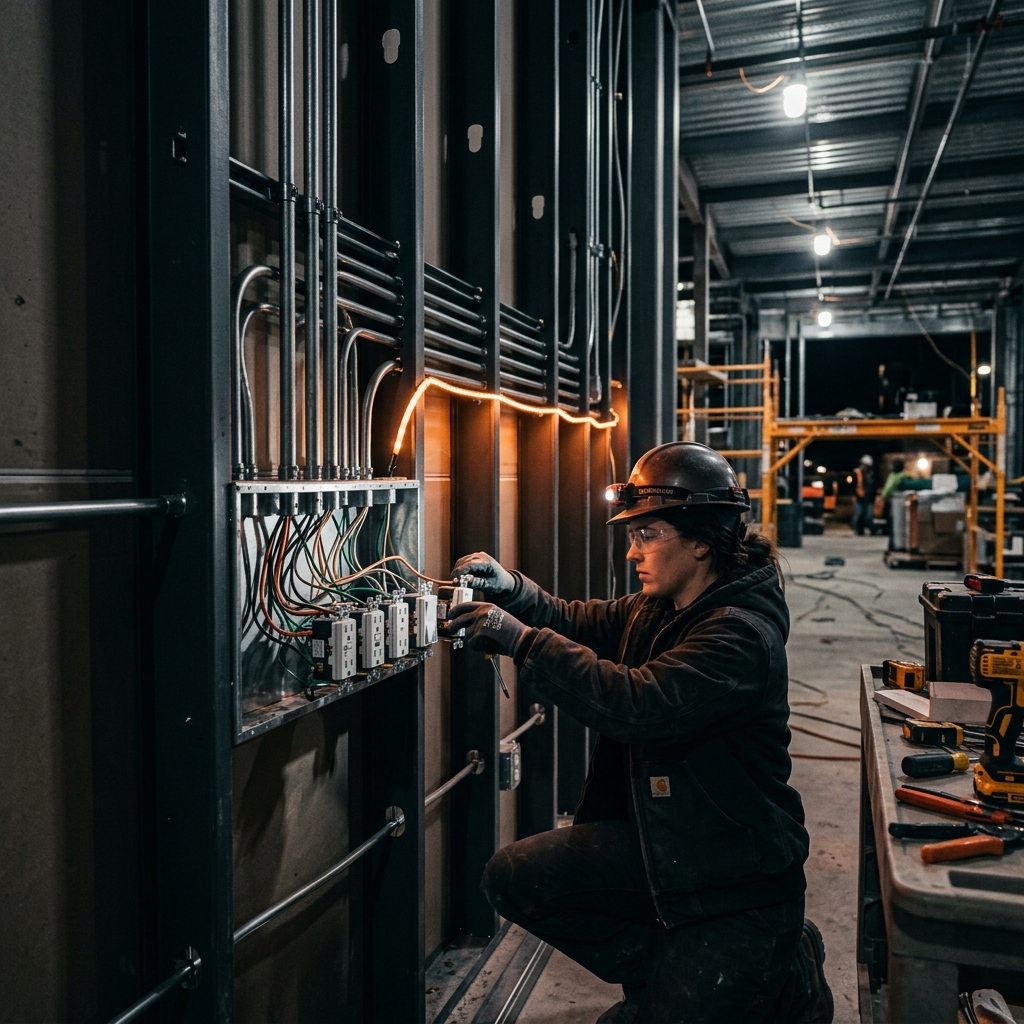
ETEM Engineering designs DALI-2, 0-10V, and IoT-enabled lighting control systems for commercial, institutional, and industrial facilities. We handle everything from protocol selection to commissioning coordination.
Get a Free Consultation